Photo Jottings - Page 47 of 127 - Photography equipment expertise

Here’s a brief look at the Sony DT 50mm F/1.8 SAM lens.  Scroll down for the review.

Lens
SAL-50F18  Sony DT 50mm F/1.8 SAM
Box contents
Front and rear caps, and users manual.
Cost
$170 retail
Build quality
Good
Additional information
First prime “DT” lens for Sony.  No hood available.  Has shorter focal length (about 2mm-3mm, but noticeable only when compared side by side) than the Sony 50mm F/1.4
Specifications below
Optical configuration
6 elements in 5 groups
Angle of view
32°
Aperture
7 blades, circular
Full frame and APS-C
Made for APS-C cameras.   APS-C equivalent, 75mm.  Will work on full frame cameras, and gives full coverage, but APS-C size capt will auto crop the image, hopefully Sony will correct this in the future.
Depth of field and focus scales?
Focus scale only
Minimum focus, image plane to subject
13.3″  (340mm)
Minimum focus, end of lens barrel to subject
9.25″  (235mm)
Hard stop at infinity focus?
No
Length changes when focusing?
Yes
Focus ring turns in AF?
Yes
Filter size
49mm
Filter ring rotates?
No
Distance encoder?
Yes
Max magnification
0.20x
Min. F/stop
F/22
Sony teleconverter compatible?
No
Dimensions W x L (my measurements)
2.75″ x 1.8″    70mm x 45mm.  Add 2mm to width for AM/MF switch on barrel.
Maximum  extended length (my measurements)
1.96″  (50mm)
Weight bare (my scale)
6.0oz  (172g)  6.8oz (193g) with caps
Requisite product shots.

June2009/s5018fta.jpg
Official product shot
June2009/s5018box2.jpg
Box and lens
June2009/s5018ftelemzz.jpg
Deep front element.
June2009/s5018bkzz.jpg
Backside, plastic mount
June2009/s5018ftexzza.jpg
Side shot with full focus extension
2012/s5018mtf2.jpg
Sony X-ray view and MTF chart
All testing done with the Sony A 700 .  For a better understanding of my review methods and terminology, go here.

The Sony DT 50mm F/1.8 SAM is the first DT prime lens that Sony has issued, and is being marketed as a “portrait” lens.  It’s similar in size and weight to the old Minolta AF 50mm F/1.7,but noticeably lighter than the more expensive Sony 50mm F/1.4 lens.  The outside appearance is sleek, with a nice silver ring around the barrel, similar to the old Konica Minolta lenses.  The Sony DT 50mm F/1.8 SAM also sports a satin/flat black first seen on the new kit lens.  The new DT lenses now have rubber around the focus ring, an AF/MF switch on the lens barrel, and last, but not least, the “SAM” or “Smooth autofocus motor” that isn’t any better than the old screw drive system.  This lens is made in “China” which is a little surprising, (the new “kit” lens is made in Japan).  There is no clear indication of how many “ED” or “aspherical elements are used in the design, though SonyStyle.com mentions the use of “ED glass.”  Based on the X-ray view supplied by Sony above, it doesn’t have any special lens elements inside.

This lens has a medium to long focus throw, and is no AF speed demon, but focusing is good, and mostly accurate.  There’s a tiny bit of slop on the focus ring if you wiggle it by hand when engaged, or disengaged, this doesn’t affect AF operation though.  Focusing takes slightly more than a quarter turn from close focus to infinity.  The focus ring turns in auto-focus mode, but not the filter ring.  The SAM or “smooth autofocus motor” is not very well implemented, and is no better than the old Minolta screw-drive system.  Also, you have to use the barrel mounted AF/MF switch to de-couple the focus ring, you cannot use DMF or the thumb switch, that just makes the AF inoperable, but does not de-couple the focus ring, turning the focus ring while still engaged may damage the gears..
In the box you get the lens and a couple of manuals in different languages.  There is no hood for this lens, and Sony offers no accessory hood for it.  Based on the design, you won’t be able to get a hood on it, unless you buy a filter mount type.  The front element is recessed deeply, so that probably works as well as a hood would.
The lens has a green/magenta multi-coating.  It also resists flare and ghosting well, you’ll see a very diffused green blob opposite the sun when the sun is in the frame at an angle, and nothing when the sun is in the center of the image.  There is some veiling glare which is typical when the sun is at the outside edge of the image, but easily corrected by using your hand to block the light source, see images below.  With the sun centered in the image, there are no rings or long flares.
Filter size is 49mm.  This is one of Sony’s least popular filter sizes.  Other Sony lenses using 49mm filters; the Sony 28mm F/2.8 and DT 30mm F/2.8 macro.  The NEX system has many lenses that use this size.
Filter use.  Additional vignetting is noticeable at F/1.8 when using a slim UV filter, see vignetting below.
Coma is basically non-existent.   See crops below.
Color looks the same as other Sony lenses.
Close up filter.  N/A
Bokeh is neutral to good.  In other words, F/1.8 has harsh edges, which don’t look so good, at F/2.2 things seem to smooth out better.  The aperture shape (heptagons) start to show up around F/4.  See sample crops below.
Lateral Color fringing is controlled well, and is almost non-existent.  Axial color fringing is mild, even at F/1.8, and is mostly gone at F/4.


Random samples below.
Sun in shot, F/5.6
Sun centered, F/5.6
June2009/s5018snoff.jpg June2009/s5018snctr.jpg
veiling glare, F/5.6
veiling glare with hand shield, F/5.6
June2009/s5018flghs2.jpg June2009/s5018flghs1.jpg
Bokeh, F/1.8
Bokeh, F/2.2
June2009/s5018bok18c.jpg June2009/s5018bok22c.jpg
Bokeh, F/2.5
Bokeh, F/2.8
June2009/s5018bok25c.jpg June2009/s5018bok28c.jpg


When the sun is in the frame at an angle, the usual result is a greenish blob opposite the sun, seen in the lower left of the first image.  When the sun is centered, everything is fine.  Veiling glare results are typical, but a carefully placed hand will prevent this, notice a portion of my finger in the upper left part of the image.  There is no optional hood with this lens, and one cannot be mounted due to the design, unless you get a screw-on type.  The Sony DT 50mm F/1.8 has much better resistance to flare and ghosting than the older Minolta AF 50mm F/1.7.
Bokeh looks very busy wide open at F/1.8, where the highlights have partial, hard outlined edges.  By F/2.2, things look much smoother.  Stopping down past F/4 starts to show the aperture shape, but it’s not distracting.


Coma samples below.


F/1.8
F/2.8
June2009/s5018cma18.jpg June2009/s5018cma28.jpg


Coma really has no presence here, I’m just showing this as a standard comparison.  The results here are better wide open than the Sony 50mm F/1.4, or the Minolta AF 50mm F/1.7.


Example of veiling haze cropped from the center.


F/1.8
F/2.2
June2009/s5018ca18.jpg June2009/s5018ca22.jpg
F/2.8
F/4
June2009/s5018ca28.jpg June2009/s5018ca40.jpg
There isn’t much wide-open haze at F/1.8, though I do see a little axial color fringing, which seems to diminish for the most part by F/2.2.  Notice how little the difference in color fringing and sharpness between F/2.2, and F/4!
Distortion below.
June2009/s5018dis.jpg
Slight barrel distortion.


There is minor barrel distortion, which isn’t noticeable in real shots.


Light fall-off.


F/1.8
F/1.8 with Minolta L35 slim UV filter
June2009/s5018vig18.jpg
June2009/s5018vig18fltr.jpg
F/2.2
F/2.8
June2009/s5018vig22.jpg June2009/s5018vig28.jpg
Light fall-off or corner darkening is moderate wide open, and almost heavy when using a slim UV filter, right shot.  The corners lighten up as soon as you start to stop down, and by F/2.8 is not noticeable.  Performance here is not quite as good as the Sony 50mm F/1.4 or Minolta AF 50mm F/1.7 at the same apertures.
June2009/s5018over.jpg


Shot at F/1.8, no adjustments.  Light fall-off in real images is hardly noticeable, even when used wide open as I’ve done here.  You’ll only see natural light fall-off from the sun position, and your shooting angle in the sky.


Centers and corners below.


         F/1.8 center
          F/1.8 corner
June2009/s5018ctr18.jpg June2009/s5018cn18.jpg
         F/2.2 center
          F/2.2 corner
June2009/s5018ctr22.jpg June2009/s5018cn22.jpg
         F/2.8 center
          F/2.8 corner
June2009/s5018ctr28.jpg
June2009/s5018cn28.jpg
         F/4 center
          F/4 corner
June2009/s5018ctr40.jpg
June2009/s5018cn40.jpg
         F/5.6 center
          F/5.6 corner
June2009/s5018ctr56.jpg
June2009/s5018cn56.jpg
         F/8 center
          F/8 corner
June2009/s5018ctr80.jpg
June2009/s5018cn80.jpg
         F/11 center
          F/11 corner
June2009/s5018ctr11.jpg
June2009/s5018cn11.jpg
         F/16 center
          F/16 corner
June2009/s5018ctr16.jpg
June2009/s5018cn16.jpg


The crops on the left are from the dead center, the crops on the right are from the extreme bottom right corner.  As you can see, the centers are fairly sharp wide open, but the corners require a couple of stops down to sharpen up.  The sweet spot for this lens seems to be between F/5.6, and F/8, where the corners are almost as sharp as the centers.  Diffraction sets in at F/11, but I wouldn’t be afraid of using this aperture, or F/16.  Images taken at infinity focus, so everything should be sharp, including the branches in the background.  Corner exposure variations are from light fall-off.


Close focus sample.
Below, check out the close focus shot, a 100% cropped portion of the full image.  Click image for full crop (237kb).  The sample shot was taken with the Sony A 700 12.2mp camera.  The subject is a standard US stamp, 1″x 3/4″ or 25.4mm x 19mm.  Also, note the macro shot was taken as close to the subject as focusing allowed; In this case, 9.25″ or 235mm, measured from the front of the lens barrel to the subject.
Click for larger image (237kb) F/4
This 0.20x maximum magnification shot is sharp, coming at just F/4.  This lens produces a little larger “macro” size than the Sony 50mm F/1.4, or Minolta AF 50mm F/1.7.  I chose the F/4 example, but it’s the same at F/5.6 and F/8.  If you want to get a little closer to a small subject, add a close-up filter, like I did in this review.
Bonus section!
Below we have a comparison of the Sony 50mm F/1.4 lens and the Sony DT 50mm F/1.8 SAM lens, using crops from the centers and extreme corners.
First up, the centers.
Sony 50mm F/1.4 Sony DT 50mm F/1.8 SAM
F/1.7 or F/1.8
June2009/s5014ctr17.jpg
June2009/s5018ctr18q.jpg
F/2
June2009/s5014ctr20.jpg
June2009/s5018ctr20q.jpg
F/2.2
June2009/s5014ctr22.jpg
June2009/s5018ctr22q.jpg
F/2.8
June2009/s5014ctr28.jpg
June2009/s5018ctr28q.jpg
F/4
June2009/s5014ctr40.jpg
June2009/s5018ctr40q.jpg
F/5.6
June2009/s5014ctr56.jpg
June2009/s5018ctr56q.jpg


Note; don’t compare these crops with the crops farther up the page, as they were taken on different days, with the sun at a different angle.  The top row F/1.7 is the Sony 50mm F/1.4 stopped down to F/1.7, the F/1.8 is of course from the Sony DT 50mm F/1.8.  There is a difference in the sharpness of the center crops, but it’s not huge by any stretch.  The Sony 50mm F/1.4 has better contrast at all focal lengths, especially noticeable at wide apertures, where you should be using a fast lens anyways, that’s what they’re for, and why you pay more money for them.  I also notice here the slightly shorter focal length for the Sony DT 50mm F/1.8 SAM, maybe 2mm-3mm.  For example; the antenna is smaller in the right crops, so the actual focal length is slightly less.


Now for the corners.


Sony 50mm F/1.4 Sony DT 50mm F/1.8 SAM
F/1.7 or F/1.8
June2009/s5014corn17.jpg
June2009/s5018corn18.jpg
F/2
June2009/s5014corn20.jpg
June2009/s5018corn20.jpg
F/2.2
June2009/s5014corn22.jpg
June2009/s5018corn22.jpg
F/2.8
June2009/s5014corn28.jpg
June2009/s5018corn28.jpg
F/4
June2009/s5014corn40.jpg
June2009/s5018corn40.jpg
F/5.6
June2009/s5014corn56.jpg
June2009/s5018ctr56q.jpg
The corners are pretty close in sharpness, but I’d give the Sony 50mm F/1.4 the edge past F/2.2.  Light fall-off is similar, though the Sony 50mm F/1.4 has slightly less.
My final thoughts.
The Sony DT 50mm F/1.8 SAM lens turned in a good performance.  It’s compact and very light-weight, and reasonably fast for a low price of just $170.  This lens would be a less expensive alternative to the Sony 50mm F/1.4 I’ve compared it to in the review.  This first prime “DT” lens is a little soft at F/1.8-2.0, but sharpens up quickly at F/2.2-2.8 where the centers look good at large sizes.  This is a good lens to have if you really need shutter speed in poor lighting and don’t want to ramp up the ISO; it’s almost two stops faster than a regular zoom or prime lens.  If you don’t need a fast shutter speed, use your regular slow lens and a tripod for the best results.  This lens is being marketed as a “portrait” lens, and used as such; the rather long equivalent focal length (75mm) wouldn’t be a factor.  As a fast, walk around lens it may not be so useful indoors or in confined areas.  I guess it all depends on your intended application.  Check out theDT 35/1.8 SAM which performs great, and gives the same coverage as a 50mm lens on a full frame camera.
For those of you thinking you may go full frame in the near future, forget the Sony DT 50mm F/1.8 SAM, and spend more money on the full frame compatible (and 2/3 stop faster) Sony 50mm F/1.4, or better yet, the Sigma 50/1.4 HSM.
  • Sharpest centers; Sony 50mm F/1.4.
  • Sharpest corners; Sony 50mm F/1.4, but just barely.
  • Least amount of light fall-off; Sony 50mm F/1.4
  • Least amount of distortion; Sony 50mm F/1.4
  • Color fringing control; about the same.
  • Largest reproduction ratio (macro); Sony DT 50mm F/1.8 SAM
  • Bokeh; about the same.
  • Build quality; Sony 50mm F/1.4.
  • Focusing; about the same.
  • Value; personally, the Sony 50mm F/1.4.

Full review of the Sony DT 55-300mm F/4.5-5.6 SAM lens. 

Late2012/s55300box.jpg
Box and contents
The Sony A77 was used for this review.  For a better understanding of terms and methods used in this review, go here.
The usual center, mid-section and corner crops are located below the conclusion.
Don’t forget to check out the full size samples from the A77 here.
 
Introduction.
Sony introduces a longer version of the popular ‘kit’ 55-200mm telephoto zoom, sporting a focal length of 55-300mm, or 82.5-450mm in 135 format.
The Sony DT 55-300mm F/4.5-5.6 SAM has a good build quality, with a metal mount and high quality plastic for the body and extension barrel.  It feels solid and smooth in the hand, and is balanced well on larger cameras like the A65/77.  Appearance wise, it has a slightly speckled satin black finish, very similar to Sony camera bodies.  Outside features include a handy zoom lock, AF/MF switch on the left side to turn off the SAM, ribbed rubber manual focusing ring at the front, and a large zoom ring at the back with focal length marks at 55mm, 70mm, 100mm, 200mm, and 300mm.  Inside, you will find one ‘ED’ element.  The lens is made in China.
Zooming is smooth, and damped appropriately in my opinion.  It does have a zoom lock, (locks only at 55mm) but you probably won’t need it.  Zooming all the way out increases the length by 1.65″ (42mm).
EXIF focal length data records correctly at all marks.
Inside the box is the lens, front and rear caps, plastic solid hood, and owner’s manual.
Focusing.  This lens uses Sony’s SAM system to provide focusing, although it doesn’t seem to have the quieter SAM II focusing of recent lenses like the 18-135mm.  All focusing for the 55-300mm is done by way of extending and turning the front section of the lens, which means the filter ring turns, so your polarizing and graduated neutral density filters will need to be adjusted after you focus; this type of focusing is a real pain for people that like to use filters; it was very popular up until the 1980s; at which point people started demanding something better.  Sony designed this lens for cheap production like the 55-200mm, not speed and ease of use.  The focusing ring turns about 90° from close focus to infinity, which is almost too quick for accurate manual focusing.  Auto-focusing speed is relatively slow (typical with front focusing designs), however, accuracy is pretty good on my A77, however, your results may vary depending on the calibration of your particular lens and camera.
To manually focus the lens, turn the AM/MF to MF, otherwise, you’ll strip the gears out of the focusing system if you try to force it.
2594-kurtmunger-banner.gif

Requisite product shots.

Late2012/s55300sd.jpg
Full focus extension
Late2012/s55300sdex.jpg
Side shot showing full zoom with extended focus.
Late2012/s55300bk.jpg
Metal mount
Late2012/s55300ft.jpg
Front element showing baffle inside
Late2012/55300mtf.jpg
Sony X-ray view and MTF chart

General information and specifications.

Lens
SAL-55300  Sony DT 55-300mm F/4.5-5.6 SAM
Box contents
Front cap, rear cap, hood, and users manual.
Cost
Approximately $298
Build quality
Good.
Additional information
Similar in design and performance to the Sony 75-300mm, and the 55-200mm.
Specifications below
Optical configuration
12 elements in 9 groups
Angle of view
29˚-5° APS-C
Aperture
7 blades, curved
Full frame and APS-C
Made for APS-C cameras only, but will work on full frame using APS-C size capture.  Equivalent to 82.5-450mm in 135 format.
Depth of field and focus scales?
Nothing
Minimum focus, image plane to subject
About 54″  (1372mm)
Minimum focus, end of lens barrel to subject
About 43.8″  (1113mm)
Hard stop at infinity focus?
No, stops beyond infinity.
Length changes when focusing?
Yes
Focus ring turns in AF?
Yes
Filter size
62mm
Filter ring rotates?
Yes
Distance encoder?
Yes
Max magnification
1:3.7 or 0.27x
Min. F/stop
F/22-29
Sony teleconverter compatible?
No
Length changes when zooming?
Yes
Dimensions WxL  (my measurements)
3.00″ x 4.6″   76mm x 117mm (131mm long with focus extension)
Maximum  extended length (my measurements)
6.14″ (156mm).  171mm with focus extension.
Weight bare (my scale)
16.05oz  (467g) bare
Optical qualities summary.
Lens flare/ghosting.  Average control.  Small green/orange blobs show up at all focal lengths when super bright lights are in the image.
Light fall-off.  Minor amounts at the long end.
Color fringing (CA).  Lateral color fringing control is about average for a modern telephoto zoom.  I see magenta and cyan along the edges of the image, especially as you zoom to 300mm, however, all modern Sony cameras will correct this by default.  See uncorrected sample crops below the conclusion.
Bokeh.  Poor at the wide end; not bad at the long end.  See examples below.
Color.   Same as other Sony lenses.
Close up filter.  N/A
Coma.  None.
Regular filters cause no additional light fall-off at any zoom length.
Filter size.  62mm.  Sharing this size in the Sony DT line-up are the Carl Zeiss 16-80mm, 16-105mm, 18-135mm, 18-200mm, 18-250mm, and the 70-300mm G.
Distortion.  Generally low across the zoom range.  You’ll find the most (uncorrected) distortion around 100mm, which is moderate to strong pincushion.  See samples below.
Late2012/55raw.jpg
Mild to moderate barrel distortion at 55mm, uncorrected.
Late2012/55jpg.jpg
55mm, with lens comp distortion on.
Late2012/100raw.jpg
Moderate to strong pincushion distortion at 100mm, uncorrected.
Late2012/100jpg.jpg
100mm, with lens comp distortion on.
Late2012/300raw.jpg
Minor to moderate pincushion distortion at 300mm, uncorrected.
Late2012/300jpg.jpg
300mm, with lens comp distortion on.


There isn’t a problem with distortion on this lens generally speaking, however, if you shoot RAW, you’ll encounter the strongest distortion around 100mm.  At the long end, pincushion is surprisingly low for this type of lens.


Bokeh samples.


          55mm   F/4.5
            55mm   F/8
Late2012/55300bok5545.jpg
Late2012/55300bok5580.jpg
           300mm  F/5.6
             300mm  F/8
Late2012/55300bok30056.jpg
Late2012/55300bok30080.jpg


Bokeh looks a little ‘busy’ at shorter focal lengths, showing outlines and center dots, especially noticeable at smaller apertures.  At the long end highlight blur looks somewhat smooth.  Bokeh is the character of out of focus highlights, and not simply how far out of focus the background is.

Light fall-off samples.
          55mm   F/4.5
            55mm   F/5.6
Late2012/55300vig45w.jpg
Late2012/55300vig56w.jpg
           300mm  F/5.6
             300mm  F/8
Late2012/55300vig56l.jpg
Late2012/55300vig80l.jpg


Light fall-off is not a problem on this lens at any focal length, even with thick filters.  Towards the long end at the widest aperture you’ll see some light fall-off, but the transition is so even that you won’t notice this in your pictures unless you display them side-by-side as I’ve done here.  The images above are with lens shading turned off, if you turn that feature on, you won’t notice any differences between the apertures.


Aperture/focal length guide.


Maximum aperture
       F/4.5
       F/5
       F/5.6
Range
55-135mm
140-210mm
230-300mm
Focal length numbers carry through between apertures, which is normal.  You may get slightly different numbers if you want to spend all day firing off shots and moving the zoom ring in tiny increments.


Let’s check out the close focus capabilities of this lens.


The sample shot was taken with the Sony A77 24MP camera, so don’t compare it with some others that were taken with the 12.2mp A700, or 16mp A580.  The subject is a standard US stamp, 0.87″x 1.0″ or 22mm x 25mm.  Also, note the macro shot was taken as close to the subject as focusing allowed; in this case a very long 43.8” (1113mm), measured from the front of the lens barrel to the subject.  
 
Reproduction size is average for a newer zoom lens (0.27x or 1:3.7), click for cropped image.  The stamp looks reasonably sharp, but contrast is mediocre at best.  As a side note; the “1996” on the bottom left of the stamp measures a mere 1mm wide.  
As close as you can get, F/8.
Conclusion. 

The Sony DT 55-300mm F/4.5-5.6 SAM turned in a good review, especially for the price!  Is it a better value than the 75-300mm, or 55-200mm kit lens?  Read on!


On the plus side, contrast and resolution are quite good at the maximum apertures at all zoom lengths, but stopping down to F/8 adds a little more contrast to the image.  Distortion is generally well controlled, and is not a problem at all with in-camera lens corrections enabled.  Also, light fall-off is not an issue, even when shooting in RAW with no shading corrections.


One downer is the focusing method, which involves extending and turning the front section of the lens, which also slows down the AF speed.  As I mentioned in the introduction, this is awful for filter users because you have to fix the focus, then adjust your filters, then shoot; if you forget, you might ruin the image if a graduated ND filter is not aligned properly.  Both the 75-300mm and 55-200mm use extension focusing, but it would’ve been nice to make it internal, and increase the price point a little bit in my opinion, oh well, maybe most users don’t use filters, so they won’t care.


Bottom line: I’d definitely recommend the 55-300mm over the 75-300mm for APS-C users, and also the 55-200mm, as the cost difference is negligible.


Secret: The 55-300mm is almost as sharp in the centers and mid-sections as the expensive 70-400mm.  If you don’t look at your images blown up to 100% on your computer, you won’t notice the difference!
If you’ve enjoyed this review, and are thinking of purchasing this lens or any other stuff, please use my B&H photo affiliate links, I get a small portion of each sale, but it doesn’t cost you a penny more.  It helps pay the rather high cost of running the website, thanks!


2594-kurtmunger-banner.gif


Sample crops from the centers, mid-sections and corners.


55mm.


Late2012/55300fsi55.jpg
Full resized image
          Center
          Mid-section
             Corner
F/4.5
Late2012/55300ctr45w.jpg
Late2012/55300mid45w.jpg
Late2012/55300corn45w.jpg
F/5.6
Late2012/55300ctr56w.jpg
Late2012/55300mid56w.jpg
Late2012/55300corn56w.jpg
F/8
Late2012/55300ctr80w.jpg
Late2012/55300mid80w.jpg
Late2012/55300corn80w.jpg
F/11
Late2012/55300ctr11w.jpg
Late2012/55300mid11w.jpg
Late2012/55300corn11w.jpg


I see sharp centers and mid-sections at the maximum aperture of F/4.5, with the corners sharpening up at F/8.  Very light color fringing is noticeable in the corner crops.


150mm.


Late2012/55300fsi150.jpg
Full resized image
          Center
          Mid-section
             Corner
F/5.6
Late2012/55300ctr56m.jpg
Late2012/55300mid56m.jpg
Late2012/55300corn56m.jpg
F/8
Late2012/55300ctr80m.jpg
Late2012/55300mid80m.jpg
Late2012/55300corn80m.jpg
F/11
Late2012/55300ctr11m.jpg
Late2012/55300mid11m.jpg
Late2012/55300corn11m.jpg


Contrast improves at F/8, and the whole image is pretty sharp.  Diffraction softens the image slightly at F/11.


300mm.


Late2012/55300fsi300.jpg
Full resized image
          Center
          Mid-section
             Corner
F/5.6
Late2012/55300ctr56L.jpg
Late2012/55300mid56L.jpg
Late2012/55300corn56L.jpg
F/8
Late2012/55300ctr80L.jpg
Late2012/55300mid80L.jpg
Late2012/55300corn80L.jpg
F/11
Late2012/55300ctr11L.jpg
Late2012/55300mid11L.jpg
Late2012/55300corn11L.jpg


At the long end through atmospheric haze, their doesn’t seem to be much change throughout the image at F/5.6-8 except light fall-off in the corners is less at F/8.  I see quite a bit of color fringing in the mid-sections and corner crops here, especially magenta.  However, if you have your lens compensations turned on, this will not be an issue.  All samples were taken in RAW with the Sony A77.


That’s it for the review, if you’d like to help out the site, please visit B&H Photo if you’re thinking of purchasing the Sony DT 55-300mm F/4.5-5.6 SAM.


2594-kurtmunger-banner.gif

Well, let’s see.  It’s been four years since I bought a new cell phone, and of course the service is no better than it was in 1999, (first cell with this carrier) when they still had analog service, oh well.  My old cell phone went through the washing machine a couple of times and wasn’t charging properly, that’s the only reason I purchased a new one.  I normally wait longer, say maybe 6-7 years between phones.

This phone is available in the US (as of 1/10) at AT&T stores for &99 after a rebate.  You can also pick up a 1GB M2 card for $5 at the same store.

Since I use a phone to talk to other people, and take pictures, this review will not cover the additional applications that hinder that type of activity, so this will be a review of the camera function on the Sony Ericsson C905a only, because I don’t really care about the phone part!


Here are some quick specifications on the phone, and camera.

  • Size: 4.1″ x 1.9″ x 0.7″ or  104 x 49 x 18mm
  • Weight: 4.8oz, or 136g
  • Screen: 240 x 320, 2.4″ 262,144 pixels Color TFT
  • Color: Ice silver
  • Memory: 160mb internal usable, or Memory stick micro, (M2™) 1gb holds around 300 images, up to 8gb available separately.
  • Megapixels: 8.1
  • Autofocus
  • AF assist lamp
  • Image stabilization
  • Face detection
  • Xenon flash
  • Red eye reduction
  • Video light
  • Macro capable


Let’s check out some shots of the camera part of the phone.

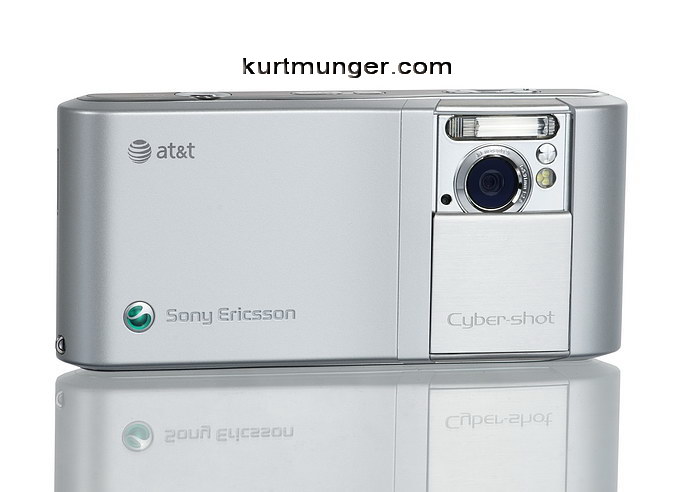
Jan2010/sarcft2.jpg
Back of phone with lens cover down


This is the back of the phone.  You slide the cover down, which automatically turns on the camera/video function.


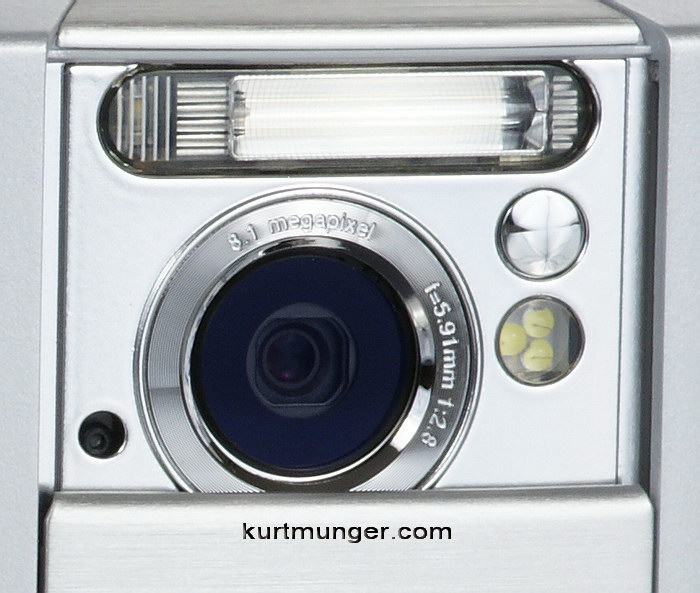
Jan2010/sarclensa.jpg
close up of small lens


This is the lens, which is quite small, the glass part measures about 3/8″ or 10mm.


Random observations about the operation of the camera.


The aperture is fixed at F/2.8, I’ve never seen any other aperture listed in the EXIF data, the shutter speeds change as well as the ISO, but you cannot control anything.

File sizes in broad daylight average about 2.2mb.  The largest file size I’ve seen is 2.7mb.  Low light shots are about 1.3mb

EXIF data shows shutter speed, ISO, white balance, date and time, exposure compensation, metering mode, flash mode.  It also shows aperture and focal length, but those are fixed.

I don’t know how high or low the shutter speeds go, but I’ve observed 1/5000s, the lowest was 1/10s.

Most outdoor shots seem to be ISO 64, and a few at ISO 80, and thank god for that.  Inside at night in a well lit room expect ISOs of 200-640 or above, (depending on exposure compensation), even when using the flash.  Maximum ISO is 1600.

Focal length is 5.91mm, and equivalent to about 38mm in 35mm terms.

The lens has a real focusing system, and will focus down to about 3.5″ or 90mm in macro mode.  Don’t shoot closer than this in macro, because the image will look sharp on the camera screen, but it will be soft when you see it enlarged on your computer.

Auto-focusing is accurate using both Auto and infinity settings. The camera uses an AF assist light, which doubles as the “Video” light.

The exposures are correct in most situations, and exposure compensation is rarely needed outdoors.  Don’t underexpose anything or you’ll wind up with a lot of noise if you try and bring up the levels later.  Indoors without the flash, expect to raise the exposure compensation at least +1.0, and realistically +2.0 to get properly exposed shots.

The camera has a real camera flash, and is usable in very low light situations, but uses high ISOs to bump up the overall exposure.

You can turn off the annoying beeps and clicks when the shutter fires, offering “stealth” picture taking.  If you use “infinity” focusing mode, there is no noise at all when using the camera.

There are four picture size settings, 8.1mp, 5mp, 3mp, and VGA (640-480).  I’d use the 5mp setting, there doesn’t seem to be much difference between it and 8mp.

There are two quality settings, fine and normal.  I couldn’t see the difference between normal and fine.

The camera has two metering settings, normal, and spot.

When you turn the camera off, the exposure compensation returns to ±0, which is good.


Let’s check out some samples and see how this camera performs.

Jan2010/c905adisa.jpg
Mild barrel distortion


The little lens shows minor barrel distortion, and is probably the least important thing to worry about on this camera.


Ghosting samples below.


Sun in corner of image
Sun centered, don’t do this at home.
Jan2010/c905acnfl.jpg
Jan2010/c905actrfl.jpg
Sun out of shot
Sun out of image
Jan2010/c905aoutfl.jpg
Jan2010/c905asperfl.jpg


Ghosting control is poor, and this lens should not be pointed anywhere close to the sun.  The sun centered shot looks like a late ’60s record album cover.
Macro shot.


Click for full cropped image


This is the macro shot, taken about 3.5″ or 90mm from the lens front to the subject.  Click the picture for the full cropped image, about 215kb.  EXIF is ISO 64, 1/80s, EV +1.00, F/2.8 and manual white balance, plus some extra whitening in PP.  The shot is pretty soft, but not so noticeable in real picture taking.


Links to full size images below.


Sony Ericsson C905a, large file, 2.6mb
Canon SD780 IS  large file, 4.6mb


Full images from the Sony Ericsson C905a, and the Canon Powershot SD780 IS (12mp).  You can clearly see the camera phone is smearing detail to a high degree.  The Canon looks much better, even with its over-packed sensor.  The coverage is slightly in favor of the C905a, I tried to get the sizes about the same, and this is the best I could do.  The Canon is a little soft on the left side for some reason.  Images are right out of the camera and have not been altered.  Both cameras where set to their highest image quality, at their lowest ISO, and taken at the infinity focus setting.


I don’t like the way the C905a renders blue skies with the correct exposure, they’re too cyan, but can be changed in Adobe Lightroom (needs hue, saturation and luminance changes).  If you underexpose, the skies look better, however, when you try to bring up the light levels in post processing, you get too much noise.


2.3mb
2.2mb
2.2mb
2.3mb


The pictures above are links to the full size image, (original and unaltered) all were taken at their highest image quality, ISO 64, so this is as good as it gets.  Apparent here is the fine detail smearing in the golf course shot.  Don’t use this camera for trying to capture small details like distant trees and grass, you’re better off with well defined subjects at short to medium distances with the background blurred slightly.  Low light shots look good on the 2.4″ LCD, but look poor on your computer screen.


Below are random images, and are not linked to larger images.


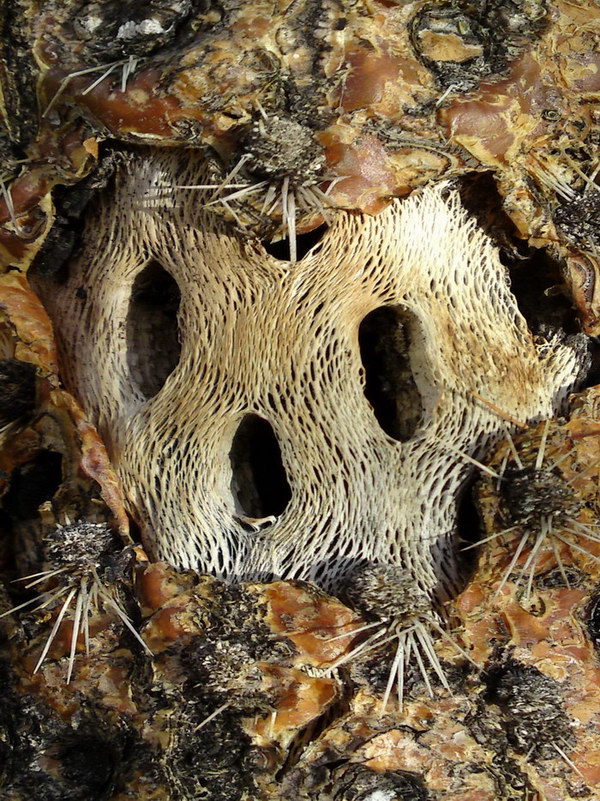
Jan2010/skull3a.jpg


This image was taken while hiking.  The dead Cholla cactus skin peels away to show what looks like a skull!  Cropped and desaturated.


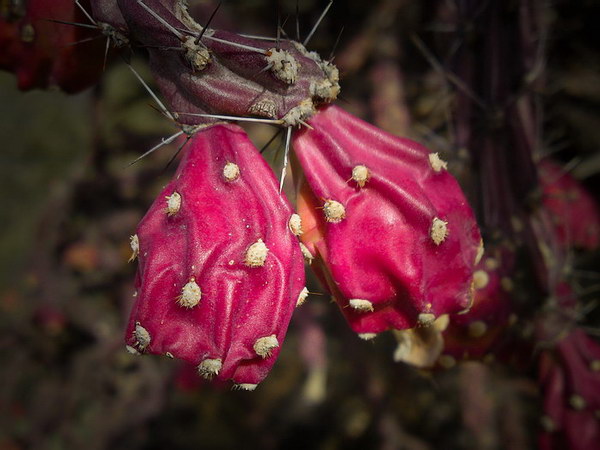
Jan2010/sep1a.jpg


Check out the colorful fruit of the Staghorn Cholla.  Here I cropped the image, saturated the red/magenta fruit, and darkened the edges of the image to emphasize the subject.


Jan2010/mtn4a.jpg


Photo shows Oro Valley AZ from the trail going up to Pusch Peak.  The mountains in the background are the Tortolitas.


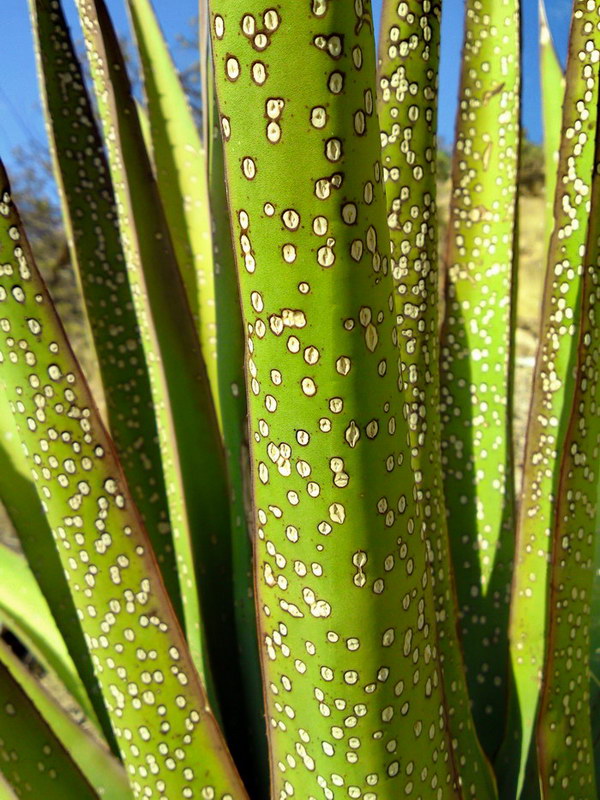
Jan2010/agave2a.jpg


This is an Agave plant with some sort of fungus attacking it.  The fungus makes it look better in my opinion.


High ISO shots below.


Jan2010/cpsml1600orig.jpg
original image


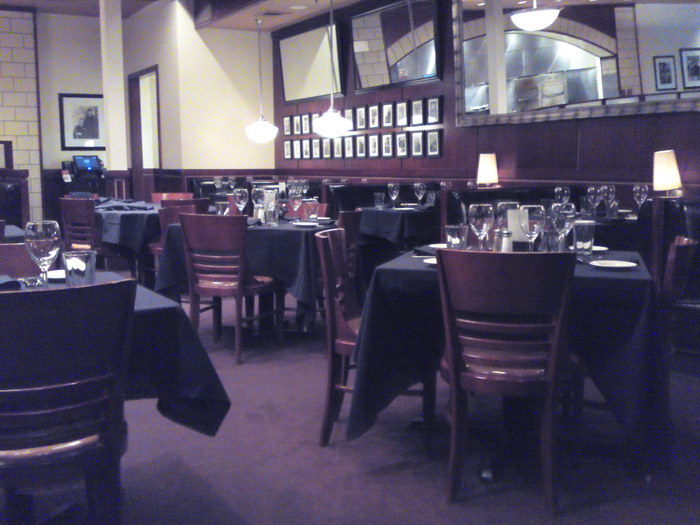
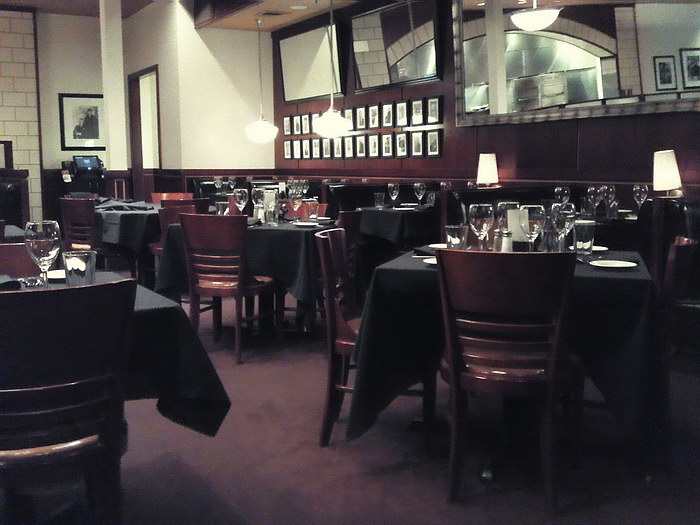
This is the small resized original image of the shot on the homepage.  As you can see, it has a bluish cast, and also noticeable in this small size is the blue confetti in the shadow areas.  For this shot I used +2.00 exposure compensation, which was needed, otherwise it would have looked terrible with the noise and all, after you tried to bring up the shadow areas later.  EXIF data reads; F/2.8, 1/10s, ISO 1600, +2.00 eV, AWB and no flash.


Jan2010/cpsml1600.jpg
tweaked shot


This is the tweaked shot.  Here I removed some blue, which makes the table clothes look black like they’re supposed to.  Next I made some fairly heavy noise reduction changes to get rid of at least some of the color blobs.  I added a little extra orange to make the wood look warmer.  Finally, I added some contrast to make the image come to life, then I sharpened the image, which almost makes it look like it has some film grain, and loses some of the smooth look. I spent less than 10 minutes doing this, if you spend any more time, the image won’t be any better.  I used Adobe Lightroom 2.3 to make most of the changes, because of the ability to manipulate individual colors.
Jan2010/cpcporig1600.jpg
original image, 100% center crop


Here is a 100% crop from the center of the original image.  You can see the blue mess that I’ve been talking about.  The shot is pretty smeared up, so some extra noise reduction isn’t going to hurt.


Jan2010/cpcplr1600.jpg
tweaked shot, 100% center crop


This is a 100% crop of the tweaked image.  You can see the extra noise reduction and color changes really help the shot out, even though there is no extra detail, and actually less to be honest, but I like this shot best.  Noticeable here are the halo’s of over-sharpening, but you don’t see them at smaller sizes, and that’s the size you’ll want to view shots at ISO 1600 with this camera.


That’s it for the review, hope you enjoyed it.

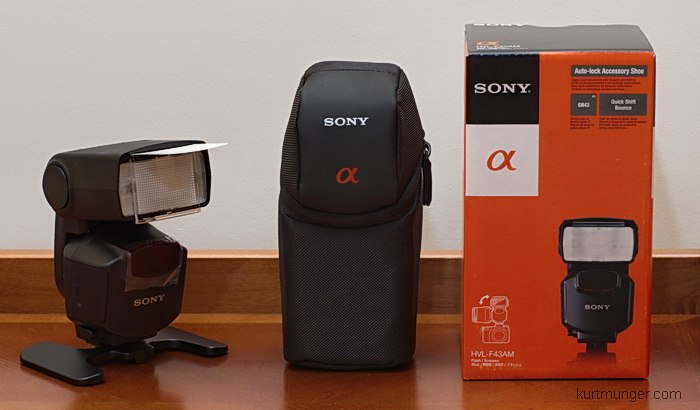
endof2011/sonyboxf43.jpg
Contents of box, including stand, case, manual and flash unit.
endof2011/sonyf43back.jpg
LCD lit up, showing some available settings
endof2011/Sonyhvlf43amlcd.jpg
Display items possible on LCD

Specifications and general information.

Model
Sony HVL-F43AM  announced in February, 2011.
Owner’s manual
Sony eSupport HVL-F43AM page    Go here and click ‘manuals, specs & warranty’ tab.
Price
Original Sony MSRP; $349.99
Tested on
Sony A580, Sony A900.
In the box
Flash, stand, vinyl pouch and instructions.
Build quality
Very good all around.
Weather sealing?
Sony claims it’s dust and moisture resistant.
Hotshoe style
Sony proprietary type
Guide number
43 meters, 141′ (ISO 100, @105mm zoom position), and 30 meters, 98′ (ISO 100 @50mm zoom).  Specs are for full frame sensors and 35mm film.
Guide number accuracy
Maximum output seems similar to other models with same rating.
Stated color temperature
Not stated.  New version states approx. 5500k.
LCD monitor
LCD.  1.65″ x .95″ (42mm x 24mm).  Has low battery indicator, overheat, zoom length with wide panel down indicator, power levels, HSS, quick shift bounce, wireless channels, and many other items, see image above.
Lights and switches
Test/Flash charge light, display light, TTL/M, zoom, function button inside four way controller, and the on-off switch.
Power source
4 AA, 1.5V
Recycle time
Less than 3 sec at 1/1.  Half-power (1/2) is instantaneous for 2-3 pops, then it slows down slightly.  Rechargeable nickel-metal hydride batteries used.
Flash duration rating
No info.
Power saving function
Yes, none, 30sec, 3min, and 30min.  Wireless flash mode power save can be set to 60min or none.
Adjustable power levels
Eight full levels; Auto, 1/1, 1/2, 1/4, 1/8, 1/16, 1/32, 1/64, 1/128, and third or half stop intervals, user selectable for a total of 22 levels.  Power levels will not continue on after reaching highest or lowest setting, you must manually press the up or down buttons and go back.
Wide angle diffuser type
Built-in, pulls out and down, covers 15mm, (10mm APS-C) and shows on display when attached (Wide).
Bounce card or reflector plate
White bounce card built in over diffuser, pulls out.
Bounce positions
150°, 120°, 90°, 75°, 60°, 45°, 30°, 0° and -8° (down).
Swivel positions
Right, 0°, 30°, 45°, 60°, 90°, – Left, 0°, 30°, 45°, 60°, 90°.
Zoom positions
Auto, wide (15mm), 24mm, 28mm, 35mm, 50mm, 70mm, 105mm.
Zoom type
Internal, and fully automatic in auto mode.
Auto format zoom
Yes, the flash knows what focal length the lens is at, either full frame or APS-C format, except on the Sony A100.
AF assist beam
Yes, red, works properly.
Custom functions
The following settings may be customized.  (Wireless CH1-4).  (HSS, on or off). (Wireless contoller mode setting, 1 or 2).  (Power level intervals, .03/.05). (Time to power save-30sec, 3min, 30min, none).  (Time to power save when using wireless flash; 60min/none).  (Recording modes in which manual flash or multiple flash may be set, M mode only or all modes).  (Feet or meters on LCD).  (Test flash setting, once, 3 times, 4 seconds).
Connections
None.
White balance info
Yes.
Modeling flash
Yes.
Multi-flash emission
Yes, highly customizable.
High speed sync
Yes, to the cameras highest shutter speed.
Wireless ability
Yes, and can be used as a control flash for a total of three groups.
Sony ADI support
Yes.
Red eye reduction
Not supported by Sony.
Dimensions
2.9″W x 6.9H x 2.75D   73mm x 164mm x 68mm   Maximum length 6.9″ (164mm) including shoe mount.  Length and depth measured with flash flat.
Weight
12.0oz (340g) without batteries.
Operating temp
0°-40°C,  32°-104°F
Quirks
Modeling flash option uses a custom ‘test’ button setting, so you have to change back and forth unless you want the modeling flash to go off every time you test fire the flash.
Flash will fire even if it isn’t charged sufficiently, so check the charge indicator before shooting, otherwise you may wind up with the wrong exposure.  It does this so you won’t miss a shot waiting for the flash to fully charge.
Bounce indicator shows only on downward bounce (8°), but not in any ‘up’ position.  It will show when the flash is swiveled.
Notes
Can be custom set for full manual use in all recording modes, even “auto.”  Flash is automatically turned off when camera power is turned off, then back on if flash is still switched on.
Fully compatible out of the box with Radiopoppers™ flash triggers.
Good for
Almost everything.
Not good for
A minor negative: Intense studio use, as there is no external battery pack input or cable connection like the F56AM or F58AM.
Recommended?
Highly recommended.  Replaced HVL-F42AM in early 2011.


Sony HVL-F56AM flash quick review

JUNE2011/f56ambox.jpg
Contents of box, velcro on flash head not included.
JUNE2011/f56ambk.jpg
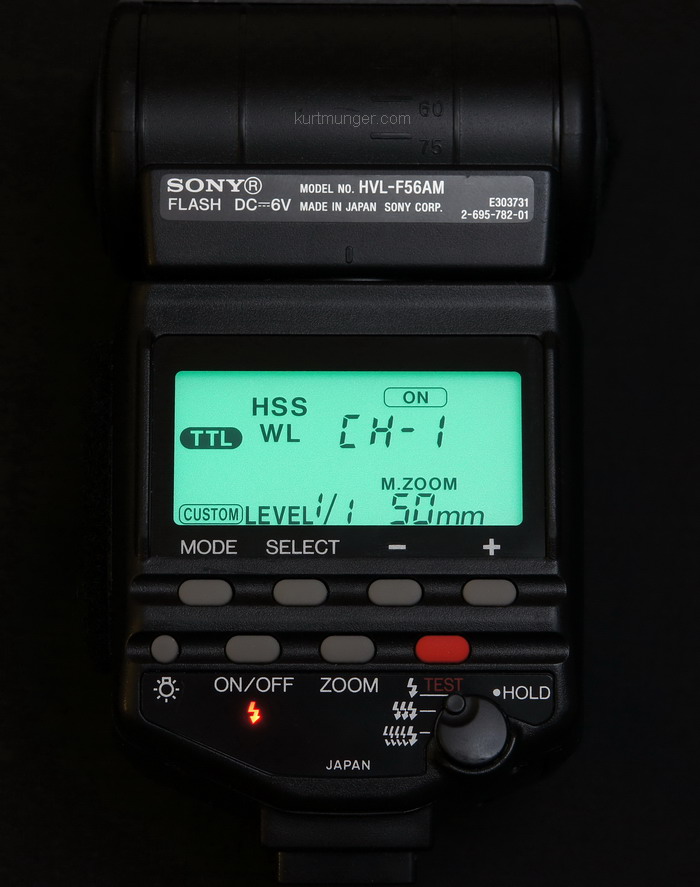
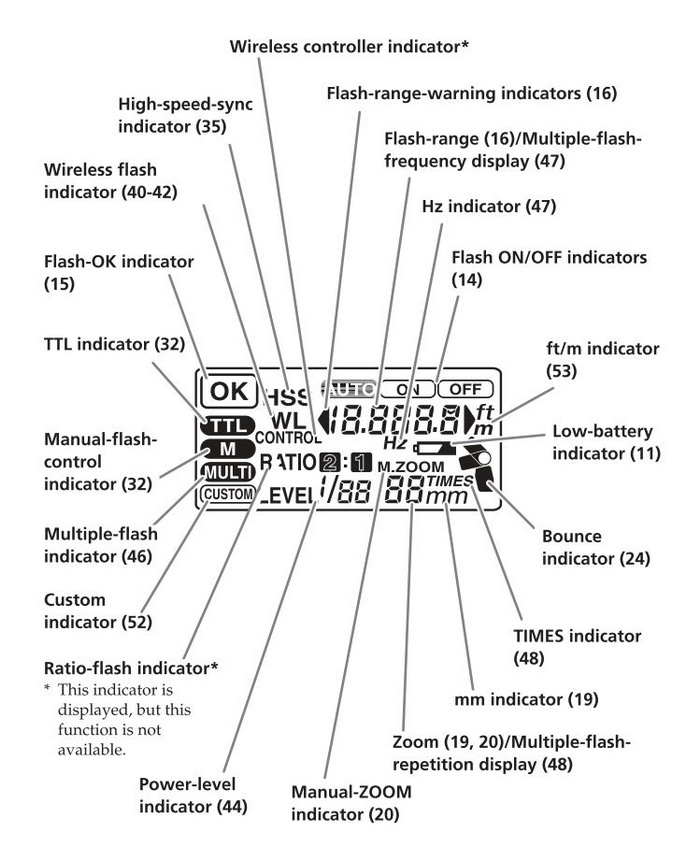
LCD lit up, showing some available settings
JUNE2011/sonyf56lcd.JPG
Display items possible on LCD

Specifications and general information.

Model
Sony HVL-F56AM  Discontinued in mid 2008.
Price
MSRP $399 at introduction, $449 when replaced.
Tested on
Sony A580, Sony A700, Sony A900.
In the box
Flash, stand, vinyl pouch and instructions.
Build quality
Very good all around.
Hotshoe style
Sony proprietary type
Guide number
56 (184′) ISO 100, @85mm zoom position, and 44 (144′) at 50mm zoom.
Guide number accuracy
Maximum output seems similar to other models with same rating.
Stated color temperature
Not stated.
LCD monitor
LCD.  1.9″ x .9″ (49mm x 23mm).  Has low battery indicator, zoom length with wide panel down indicator, power levels, HSS, bounce, wireless channels, and auto levels, see image above.
Lights and switches
Flash charge light, display light, mode, select, + or -, zoom, on-off, test, selector switch for modeling, multi flash, single and hold positions.
Power source
4 AA, 1.5V
Recycle time
About 6 sec at 1/1. Half-power (1/2) is instantaneous to about 1 sec depending on zoom setting, quarter (1/4) power is instantaneous for 2-3 pops.  Rechargeable nickel-metal hydride batteries used.
Flash duration rating
No info.
Power saving function
Yes, 4min, 15min, 60min and none.  Wireless flash mode power save can be set to 60min or none.
Adjustable power levels
Six full levels only; Auto, 1/1, 1/2, 1/4, 1/8, 1/16, and 1/32.
Wide angle diffuser type
Built-in, pulls out and down, covers 17mm, (11mm APS-C) and shows on display when attached (Wide).
Bounce card or reflector plate
Not included.
Bounce positions
45°, 60°, 75°, and 90°.
Swivel positions
Right, 30°, 45°, 60°, 75°, 90°, – Left, 30°, 45°, 60°, 75°, 90°, 120°, 150°, 180°, anddownwards 10°.
Zoom positions
Auto, wide (17mm), 24mm, 28mm, 35mm, 50mm, 70mm, 85mm.
Zoom type
Internal, and fully automatic in auto mode.
Auto format zoom
Yes, the flash knows what focal length the lens is at, either full frame or APS-C format, but it doesn’t always choose the appropriate APS-C focal length for some reason.
AF assist beam
Yes, red, works properly.
Custom functions
The following settings may be customized.  Wireless CH1-4.  Time to power save-4min, 15min, 60min, none.  Time to power save when using wireless flash; 60min/none.  Recording modes in which manual flash may be set.  Feet or meters on LCD.
Connections
Sony off-camera cable and Sony external battery adapter connector.
White balance info
No.
Modeling flash
Yes.
Multi-flash emission
Yes, customizable.
High speed sync
Yes, Sony claims up to 1/12000, although Sony doesn’t have any cameras yet with a 1/12000 shutter speed, that’s a carry-over from 1990s Minolta Maxxum (Dynax) 9 series film cameras.  Reality suggests HSS is available up to the maximum shutter speed of the camera.
Wireless ability
Yes.
Sony ADI support
Yes.
Red eye reduction
Not supported by Sony.
Dimensions
3.0″W x 6.9H x 2.4D   76mm x 175mm x 62mm   Maximum length 6.9″ (175mm) including shoe mount.  Length and depth measured with flash flat.
Weight
13.0oz (369g) without batteries, 17.0oz (481g) with batteries.
Operating temp
0°-40°C,  32°-104°F
Quirks
Works great with Radiopoppers™ triggers, without the set-up hassle of the Sony HVL-F42AMflash.
Has ‘Ratio 2:1‘ flash indicator but this function isn’t available, it’s a carry-over from Minolta film cameras.
Flash will fire even if it isn’t charged sufficiently, so check the charge indicator before shooting, otherwise you may wind up with the wrong exposure.  It does this so you won’t miss a shot waiting for the flash to fully charge.
Notes
Can be custom set for full manual use in all recording modes, even “auto.”  Flash is automatically turned off when camera power is turned off, then back on if flash is still switched on.
Compatible with Sony’s newest control flashes.
Good for
everything.
Not good for
A very small negative would be the 6 second full recharge rate, but that can be shortened with better batteries or an external battery pack.
Recommended?
Highly recommended, but not available new.  Replaced with HVL-F58AM in late 2008.


Sony HVL-F58AM flash review

endof2011/f58box.jpg
Contents of box, including stand, case, manual and flash unit.
endof2011/f58bk.jpg
LCD lit up, showing some available settings
endof2011/f58plugs.jpg
Plugs for external battery pack and off-camera cable
endof2011/f58info1.jpg
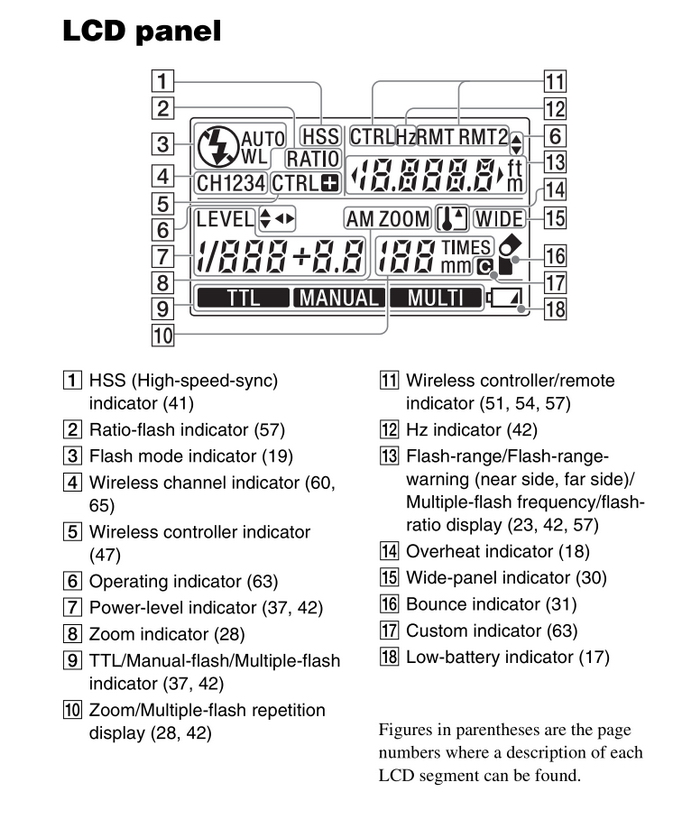
LCD panel index
endof2011/f58info2.jpg
LCD panel index

Specifications and general information.

Model
Sony HVL-F58AM  announced in June, 2008, discontinued in 2012, and replaced with HVL-F60M,review here.
Owner’s manual
Sony eSupport HVL-F58AM page    Go here and click ‘manuals, specs & warranty’ tab.
Price
Original Sony MSRP; $499.99
Tested on
Sony A580, Sony A900.
In the box
Flash, stand, vinyl pouch and instructions.
Build quality
Very good all around.
Weather sealing?
No.
Hotshoe style
Sony proprietary type
Guide number
58 meters, 190′. (ISO 100, @105mm zoom position), and 42 meters, 138′ (ISO 100, @50mm zoom).  Specs are for full frame sensors and 35mm film.
Guide number accuracy
Maximum output seems similar to other models with same rating.
Stated color temperature
Not stated.
LCD monitor
LCD.  1.7″ x 1.1″ (43mm x 28mm).  Has low battery indicator, overheat, zoom length with wide panel down indicator, power levels, HSS, quick shift bounce, wireless channels, and many other items, see images above.
Lights and switches
Test/Flash charge light, display light, TTL/M, zoom, function button inside four way controller, and the on-off switch.
Power source
4 AA, 1.5V
Recycle time
About 3 sec at 1/1.  Half-power (1/2) is instantaneous for about 2-3 pops, then it slows down.  Quarter (1/4) power is instantaneous.  Rechargeable nickel-metal hydride batteries used.
Sony claims about 5 seconds for full power recharge, probably using standard throw-away AA batteries.
Flash duration rating
No info.
Power saving function
Yes, none, 30sec, 3min, and 30min.  Wireless flash mode power save can be set to 60min or none.
Adjustable power levels
Six full levels; Auto, 1/1, 1/2, 1/4, 1/8, 1/16, 1/32, no half or third stops.
Wide angle diffuser type
Built-in, pulls out and down, covers 16mm, (11mm APS-C) and shows on display when pulled out (Wide).
Bounce card or reflector plate
White bounce card built in over diffuser, pulls out.
Bounce positions
150°, 120°, 90°, 75°, 60°, 45°, 0° and -10° (down).
Swivel positions
Right, 0°, 30°, 45°, 60°, 90°, – Left, 0°, 30°, 45°, 60°, 90°.
Zoom positions
Auto, wide (16mm), 24mm, 28mm, 35mm, 50mm, 70mm, 105mm.
Zoom type
Internal, and fully automatic in auto mode.
Auto format zoom
Yes, the flash knows what focal length the lens is at, either full frame or APS-C format, except on the Sony A100.
AF assist beam
Yes, red, works properly.
Custom functions
The following settings may be customized.  (Wireless CH1-4).  (HSS, on or off). (Wireless controller mode setting, 1 or 2).  (Time to power save-30sec, 3min, 30min, none).  (Time to power save when using wireless flash; 60min/none).  (Recording modes in which manual flash or multiple flash may be set, M mode only or all modes).  (Feet or meters on LCD).  (Test flash setting, once, 3 times, 4 seconds).
Connections
Sony off-camera cable and Sony external battery adapter connector.
White balance info
Yes.
Modeling flash
Yes.
Multi-flash emission
Yes, highly customizable.
High speed sync
Yes, to the cameras highest shutter speed.
Wireless ability
Yes, and can be used as a wireless control flash for up to three groups.
Sony ADI support
Yes.
Red eye reduction
Not supported by Sony.
Dimensions
3.0″W x 7.1H x 3.0D   77mm x 195mm x 78mm   Maximum length 7.1″ (195mm) including shoe mount.  Length and depth measured with flash flat.
Weight
15.6oz (440g) without batteries.
Operating temp
0°-40°C,  32°-104°F
Quirks
Modeling flash option uses a custom ‘test’ button setting, so you have to change back and forth unless you want the modeling flash to go off every time you test fire the flash.
Flash will fire even if it isn’t charged sufficiently, so check the charge indicator before shooting, otherwise you may wind up with the wrong exposure.  It does this so you won’t miss a shot waiting for the flash to fully charge.
Bounce indicator shows only on downward bounce (10°), but not in any ‘up’ position.  It will show when the flash is swiveled.
Notes
Can be custom set for full manual use in all recording modes, even “auto.”  Flash is automatically turned off when camera power is turned off, then back on if flash is still switched on.
Fully compatible out of the box with Radiopoppers™ triggers.
Good for
Almost everything.  Suited well for studio use because of the ability to use an external battery pack, and off-camera cables for connecting other flashes, although real studio strobes are less expensive and recycle much faster.
Not good for
Good for everything, but most people will probably be better served with the HVL-F43AM, which is much less expensive.
Recommended?
Discontinued, replaced with Sony HVL-F60M.


Sony HVL-F60M flash review

Sony replaces the HVL-F58AM in 2012 with a similar, but updated HVL-F60M, which has a neat, but limited use video light, and a new standard ISO hotshoe with nine extra connections at the front for additional communication.  Also, there are two memory settings for things like mode, power level, zoom, wireless control, and LED level etc.  There are many more power levels on this new model than anything before, going from 1/1 to 1/256 in 1/3 or 1/2 stops, that’s plenty of light control, believe me!

Power-wise, this flash is similar to the HVL-F58AM or HVL-F56AM; I don’t notice much gain in light power, although the image periphery seems a little brighter with this new model at wider zoom settings.  The video light has enough fill light power at the highest setting to adequately light something about 6′ (2m) away at a high ISO, that’s not really much, but I suppose it’s better than nothing.  If you want to slide down the video light diffuser (see pictures below), or add the 3200k orange filter (included), it’ll cut the light in half.  I do notice the orange filter has a greenish cast at the periphery, so make sure you fully, (or over-cover) your subject to avoid that tint.  The 3200k temp comes at the highest setting.

Build quality is excellent, with a very firm feel, and defined notches when moving the flash head and swivel mechanism to different angles.

Check out the product shots and additional info below.

summer2013/hvlf60mbox.jpg
Contents of box.
summer2013/hvl-f60mbk.jpg
LCD lit up, showing some available settings
summer2013/hvl-f60mplugs.jpg
Plugs for external battery pack and off-camera cable
summer2013/hvl-f60mdiff.jpg
Wide angle diffuser and bounce card.
summer2013/hvl-f60mvid.jpg
Video light combinations.


Specifications and general information.


Model
Sony HVL-F60M  announced in September, 2012.
Owner’s manual
Sony eSupport HVL-F60M page    Go here and click ‘manuals, specs & warranty’ tab.
Price
Original Sony MSRP; $549.99
Tested on
Sony A77.
In the box
Flash with pouch, hotshoe stand, hotshoe adapter with cloth pouch, bounce adapter with pouch,  orange filter for Video light, and printed instruction manual.
Build quality
Very good all around.
Weather sealing?
Claim of dust and moisture resistant.
Hotshoe style
ISO standard with multi interface foot.  This is a new hotshoe design from Sony, so if you have an older Sony camera, you’ll need an adapter, which is included with the flash.
Guide number
60 meters, 197′. (ISO 100, @105mm zoom position), and 42.4 meters, 139′ at 1/2.  Specs are for full frame sensors.
Guide number accuracy
Maximum output seems similar to models with guide numbers of 56 or 58.  I do notice slightly more illumination at the periphery of the image at wide angle settings, such as 24mm, 28mm etc than what you get with the HVL-F56AM.
Stated color temperature
Not stated.
LCD monitor
LCD.  1.8″ x 1.1″ (45mm x 28mm).  Has low battery indicator, overheat, zoom length with wide panel down indicator, power levels, HSS, quick shift bounce, wireless channels, and many other items.
Lights and switches
Test/Flash charge light, display light, function, mode, control wheel, and the on-off switch.  On the bottom is a sliding lock for the hotshoe, and a dedicated button in front for the LED video lights.
Power source
4 AA, 1.5V
Recycle time
Sony claims between 2.6 and 3.5 seconds at full power depending on battery type; however, I was never able to get those numbers with similar batteries.  My observations: about 5 sec at 1/1.  Half-power (1/2) takes less than 1 second for about 2-3 pops, then it slows down.  Quarter (1/4) power is instantaneous for the first few pops.  Rechargeable nickel-metal hydride batteries used.
Flash duration rating
No info.
Power saving function
Yes, none, 30sec, 3min, and 30min.  Wireless flash mode power save can be set to 60min or none.
Adjustable power levels
Nine full levels; Auto, 1/1, 1/2, 1/4, 1/8, 1/16, 1/32, 1/64, 1/128, adjustable in half or third stops.  1/256 is availble with HSS turned off.
Wide angle diffuser type
Built-in, pulls out and down, covers 15mm, (10mm APS-C) and shows on display when pulled out (Wide).
Bounce card or reflector plate
White bounce card built in over diffuser, pulls out.
Bounce positions
150°, 120°, 90°, 75°, 60°, 45°, 30°, 0° and -10° (down).
Swivel positions
Right, 0°, 30°, 45°, 60°, 90°, – Left, 0°, 30°, 45°, 60°, 90°.
Zoom positions
Auto, wide (15mm), 24mm, 28mm, 35mm, 50mm, 70mm, 105mm.
Zoom type
Internal, and fully automatic in auto mode.
Auto format zoom
Yes, the flash knows what focal length the lens is at, either full frame or APS-C format, except on the Sony A100.
AF assist beam
Yes, red, works properly.
Custom functions
The following settings may be customized.  (Wireless CH1-4).  (HSS, on or off). (Wireless controller mode setting, 1 or 2).  (Time to power save-30sec, 3min, 30min, none).  (Time to power save when using wireless flash; 60min/none).  (Recording modes in which manual flash or multiple flash may be set, M mode only or all modes).  (Feet or meters on LCD).  (Test flash setting, once, 3 times, 4 seconds).
Connections
Sony off-camera cable and Sony external battery adapter connector.
White balance info
Yes.
Modeling flash
Yes.
Multi-flash emission
Yes, highly customizable.
High speed sync
Yes, to the cameras highest shutter speed.
Wireless ability
Yes, and can be used as a wireless control flash for up to three groups.
Sony ADI support
Yes.
Red eye reduction
Not supported by Sony.
Dimensions
My measurements; 3.1″W x 7.75H x 2.75D   79mm x 197mm x 70mm   Maximum length 7.75″ (197mm) including shoe mount.  Length and depth measured with flash flat.
Weight
15.9oz (450g) without batteries.
Operating temp
0°-40°C,  32°-104°F
Quirks
Modeling flash option uses a custom ‘test’ button setting, so you have to change back and forth unless you want the modeling flash to go off every time you test fire the flash.
Flash will fire even if it isn’t charged sufficiently, so check the charge indicator before shooting, otherwise you may wind up with the wrong exposure.  It does this so you won’t miss a shot waiting for the flash to fully charge.
Notes
Can be custom set for full manual use in all recording modes, even “auto.”  Flash is automatically turned off when camera power is turned off, then back on if flash is still switched on.
Compatible out of the box with Radiopoppers™ triggers in manual mode, but as with all Sony flashes, you’ll need a hotshoe adapter with an appropriate plug.
Emits a beep signal when flash has fully recharged in wireless mode.
Good for
Almost everything.  Suited well for studio use because of the ability to use an external battery pack, and off-camera cables for connecting other flashes, although real studio strobes are less expensive and recycle much faster.
Not good for
Good for everything, but most people will probably be better served with the HVL-F43AM, which is much less expensive.
Recommended?
Highly recommended for budget conscious* wedding photographers, or people wanting a high output factory flash unit with a convenient video fill light.  *Get some studio strobesand/or Quantums for serious use.

Sony HVL-F60M flash review

Anyone interested in looking at boring ISO crops?  well, there’s a lot of chatter in various Sony forums about the ISO performance of the new A580, so I thought I’d provide some side-by-side ISO comparisons of Sony’s flagship A900, the old and outdated A700, and last, but not least A580.  The A580 received rave reviews about its high ISO performance when it was introduced, so how does it stack up to the older Sony cameras from the last decade?  Read on to find out!


There are three sets of ISO comps below.  The top set shows ISO center crops from the A580 and A700, with the current Ver. 4 firmware.   The second set has the same A580 crops on the left, but with the A900 crops now in the right column.  The last set has the A700 with Ver. 3 on the left, and the most current Ver. 4 on the right (as of this review, 2/11).


All three cameras have different megapixel sensors, so that’s why the crops don’t cover the same area.  I didn’t try to resize the image area in each crop because I wanted you to see the resolution differences also.  All images were shot in RAW at an aperture of F/8, white balance set to 2900k and trimmed to magenta 3.  A tripod was used, with the two second timer, and focusing was done manually.  The CZ 24-70mm F/2.8 was used at 24mm for the A900, and theSigma 10-20mm F/4-5.6 for the A700 and A580, set to 16mm.


Images were prepared using Adobe camera raw 6.3, there were no image adjustments made of any kind, except cropping and converting to Jpeg for the site.  Crops are from the dead center of the image.


Sony A580 firmware Ver. 1.11
Sony A700 firmware Ver. 4
Janfeb2011/a580x200.jpg
ISO 200
Janfeb2011/a700x200a.jpg
ISO 200
Janfeb2011/a580x400.jpg
ISO 400
Janfeb2011/a700x400a.jpg
ISO 400
Janfeb2011/a580x800.jpg
ISO 800
Janfeb2011/a700x800a.jpg
ISO 800
Janfeb2011/a580x1600.jpg
ISO 1600
Janfeb2011/a700x1600a.jpg
ISO 1600
Janfeb2011/a580x3200.jpg
ISO 3200
Janfeb2011/a700x3200a.jpg
ISO 3200
Janfeb2011/a580x6400.jpg
ISO 6400
Janfeb2011/a700x6400.jpg
ISO 6400
Janfeb2011/a58x12800.jpg
ISO 12800
Intentionally left blank


The higher resolution of the A580 in noticeable here, but the noise pattern is very similar until you creep up around ISO 3200, where the A700 starts going bad, and ISO 6400 is obviously far better on the A580.


Sony A580 firmware Ver. 1.11
Sony A900 firmware Ver. 1.00
Janfeb2011/a580x200.jpg
ISO 200
Janfeb2011/a900x200b.jpg
ISO 200
Janfeb2011/a580x400.jpg
ISO 400
Janfeb2011/a900x400b.jpg
ISO 400
Janfeb2011/a580x800.jpg
ISO 800
Janfeb2011/a900x800b.jpg
ISO 800
Janfeb2011/a580x1600.jpg
ISO 1600
Janfeb2011/a900x1600b.jpg
ISO 1600
Janfeb2011/a580x3200.jpg
ISO 3200
Janfeb2011/a900x3200b.jpg
ISO 3200
Janfeb2011/a580x6400.jpg
ISO 6400
Janfeb2011/a900x6400b.jpg
ISO 6400


Here the A900 shows the quality of its 24mp full frame sensor, with higher resolution clearly visible from ISO 200-1600 to almost 3200.  However, the A580 starts to really shine at very high sensitivities, and appears to out-resolve the A900 at ISO 6400, while holding better color, that’s somewhat surprising, but shows how noise reduction and sensor technology have progressed in two plus years since the A900 was introduced.  A few people claim Sony added better noise reduction to the A900 with the new firmware update.  Consequently, I updated the A900 to ver. 2.00, and noticed no difference at all.  Sony says there was no modification to noise reduction in this firmware (Ver. 2.00) and I can confirm that.


Sony A700 firmware Ver. 3
Sony A700 firmware Ver. 4
Janfeb2011/a700x200b.jpg
ISO 200
Janfeb2011/a700x200a.jpg
ISO 200
Janfeb2011/a700x400b.jpg
ISO 400
Janfeb2011/a700x400a.jpg
ISO 400
Janfeb2011/a700x800b.jpg
ISO 800
Janfeb2011/a700x800a.jpg
ISO 800
Janfeb2011/a700x1600b.jpg
ISO 1600
Janfeb2011/a700x1600a.jpg
ISO 1600
Janfeb2011/a700x3200b.jpg
ISO 3200
Janfeb2011/a700x3200a.jpg
ISO 3200
Janfeb2011/a700x6400b.jpg
ISO 6400
Janfeb2011/a700x6400.jpg
ISO 6400


The only noticeable thing here is the smearing luminance noise reduction in the Ver. 3 firmware (left crops), fortunately the new Ver. 4 update eliminated that, and makes the noise pattern look more like the newer Sony cameras.  In reality, it doesn’t offer any improvements in my opinion.

Sony DT 50mm F/1.8 SAM Review

Here’s a brief look at the Sony DT 50mm F/1.8 SAM lens.  Scroll down for the review. Lens SAL-50F18  Sony DT 50mm F/1.8 SAM Box contents
Front and rear caps, and users manual. Cost $170 retail Build quality Good Additional information
First prime “DT” lens for Sony.  No hood available.  Has shorter focal length (about 2mm-3mm, but noticeable only when…

Read more »

Sony HVL-F43AM Flash Review


Sony HVL-F43AM flash quick review

Contents of box, including stand, case, manual and flash unit. LCD lit up, showing some available settings Display items possible on LCD

Specifications and general information.

Model Sony HVL-F43AM  announced in February, 2011. Owner’s manual
Sony eSupport HVL-F43AM page    Go here and click ‘manuals, specs & warranty’ tab. Price Original Sony MSRP; $349.99…

Read more »

Sony HVL-F56AM Flash Review

Sony HVL-F56AM flash quick review

Contents of box, velcro on flash head not included. LCD lit up, showing some available settings Display items possible on LCD

Specifications and general information.

Model Sony HVL-F56AM  Discontinued in mid 2008.
Price MSRP $399 at introduction, $449 when replaced. Tested on
Sony A580, Sony A700, Sony A900. In the box
Flash, stand, vinyl…

Read more »

Sony HVL-F58AM Flash Review

Sony HVL-F58AM flash review

Contents of box, including stand, case, manual and flash unit. LCD lit up, showing some available settings Plugs for external battery pack and off-camera cable LCD panel index LCD panel index

Specifications and general information.

Model Sony HVL-F58AM  announced in June, 2008, discontinued in 2012, and replaced with HVL-F60M,review here. Owner’s manual

Read more »

Sony A900, A700 and A580 ISO Comparison

Anyone interested in looking at boring ISO crops?  well, there’s a lot of chatter in various Sony forums about the ISO performance of the new A580, so I thought I’d provide some side-by-side ISO comparisons of Sony’s flagship A900, the old and outdated A700, and last, but not least A580.  The A580 received rave reviews about its high ISO performance …

Read more »

Scroll to Top