∗This 90mm review camera is nearly identical to the 65mm wide angle version, except for the lens, so I’ve used the basic camera features, operating ideas, and thoughts for both reviews.∗
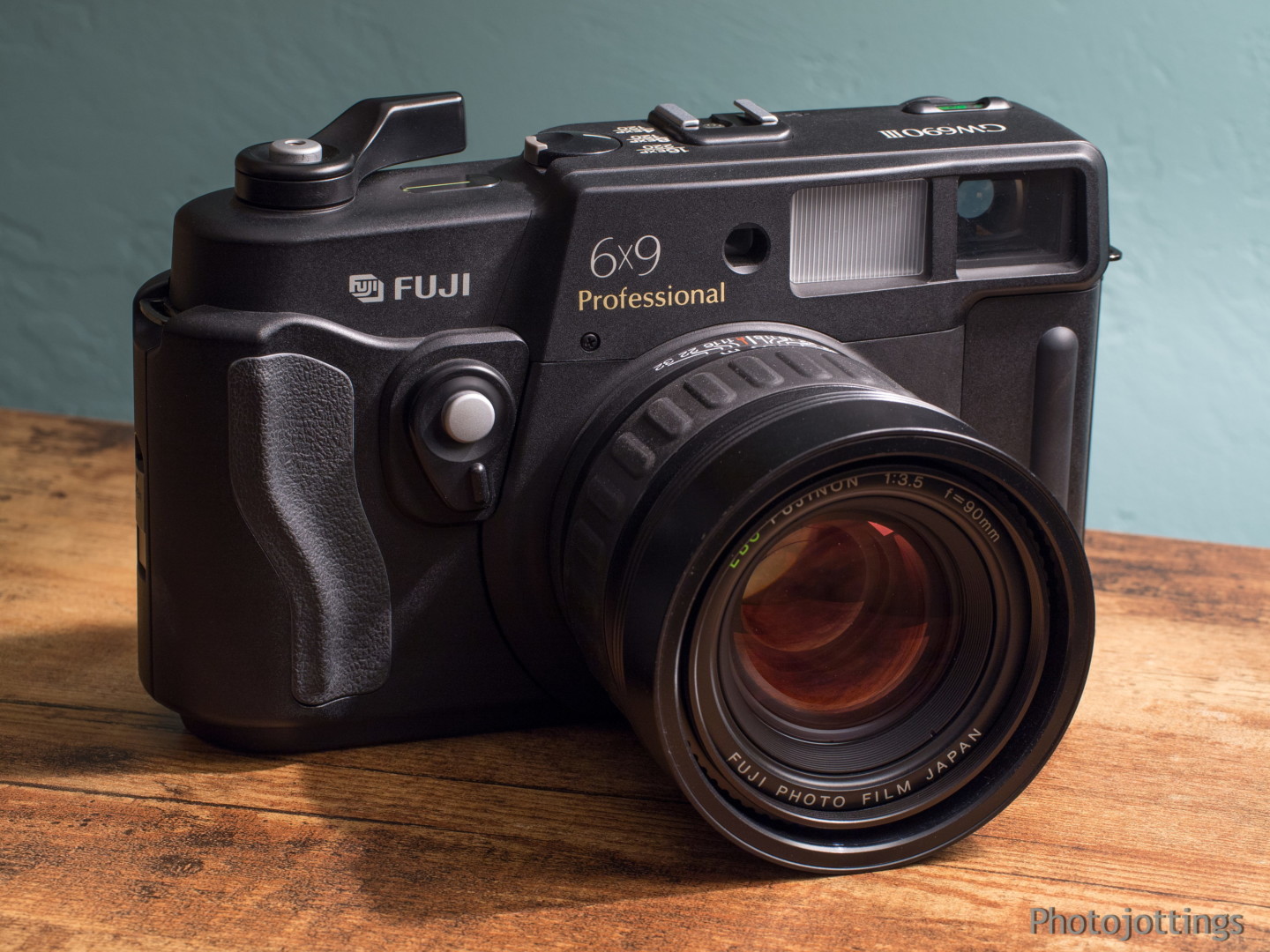
The Fuji GW690III is a medium format film camera with a fixed 90mm F/3.5 lens, and requires no batteries at all!! The Camera takes 120 film, which is still widely available today, and developing is the same as 35mm film, so your local camera shop should be able to handle all your 120 needs. The Fuji GW690III is one of two 6×9 models, the ‘GW’ designates a ‘normal’ to ‘wide angle lens,’ and the ‘GSW’ as in GSW690III is for a super wide 65mm F/5.6 lens. Since both cameras produce a picture with the same aspect ratio of 135 film, we can easily estimate the approximate coverage area to reflect what you would see on a 35mm camera. The 65mm lens has about the same coverage as a 28mm lens, and the 90mm about 40-41mm, (Fuji states 39mm in owners manual). See the comparison with a digital camera here. There are more cameras in the series, like a 6×7 and 6×8 using the same lenses. All newer models are off-shoots from 1970s models; however, the camera tested here is a early 1990s version of a model from the mid 1980s. Go here for more info.
There are many online reviews of this camera series, unfortunately, I’ve never seen any that posted full size scanned images made from the cameras. As luck would have it, I’ve scanned and made available large samples; so go down to the sample gallery and check ’em out!
With the pleasantries completed, let’s do a walk-around of this big Fuji Camera.
Camera name; Fuji GW690III
Manufactured by; Fuji Photo Film Co. LTD, Tokyo, Japan.
Made in: presumably Japan.
Manufactured in; through the 1990s.
Original MSRP; 1999 photo magazine ads from discount dealers (B&H Photo, Adorama etc) suggest a price between $1230 to$1280.
Build quality is very good, although the camera is clad in plastic, it is quite heavy and solid feeling. It weighs about the same as a Canon pro body with built-in vertical grip.
Camera features include; a hot shoe, two shutter buttons, one on top and the other in front; a shutter button lock—works for both shutter buttons, sliding retractable lens hood, double exposure prevention, exposure counter with automatic reset, coupled rangefinder, spirit level, PC port (non locking type) for off camera flash, film reminder slot, film length selector (half roll-4 shots, 120-8 shots or 220-16 shots), and ‘Nikon’ style changeable eye piece. One of the most important features is the lack of any power needed for use, meaning you need no batteries, it’a fully manual!
Focusing is of course manual with a nice damped feel. You turn the front rubber coated ring to the required distance using the coincidence (ghost image) rangefinder. Marked around the focusing ring in meters are 1, 1.2, 1.5, 2, 3, 5, 10, and ∞. Infrared focusing mark in red, see second product shot.
Aperture settings are; F/3.5, F/4, F/5.6, F/8 F/11, F/16, F/22 and F/32 with half stop clicks starting at F/4.
Actual picture size. 56mm x 83mm. Spacing ranges from about 4mm to 14mm. 8 shots per standard roll.
Compared to 135 film. It would take over five frames of 35mm film to get the same area as one 6×9 piece of 120 film! See overlay below. Capture area and depth of field similar to 40mm, F/1.7 in 135 format.
Shutter speeds include 500, 250, 125, 60, 30, 15, 8, 4, 2, 1, T. The ‘T’ is for ‘time’ and works somewhat like bulb mode, however, you must turn the shutter ring to another setting to close the shutter, or turn the wind knob about half way. It’s a mystery why Fuji didn’t put a regular bulb mode on the camera. When taking a long exposure at night, I use a black cloth to cover the front of the lens, and then turn the shutter ring so as not to move the camera. One big complaint about this camera is the shutter is very noisy, but that’s not the case at all, the shutter is very quiet, it’s almost imperceptible, test that by using the “T” setting with the back open; press the shutter button; booingggg; it’s loud! Now turn the shutter speed dial to another setting, at which point the shutter blades close and you can’t hear it unless you’re in a quiet room. The noise you hear initially is probably part of the shutter cocking mechanism. The counter counts all shutter actuations, but only records every 10th, so if the counter reads 255, there are 2550 shots on the camera. The flash syncs at all shutter settings. Dry fires only with back open.
Lens. EBC Fujinon 90mm, F/3.5. Five elements in five groups with a No. 0 interlens shutter. 5 straight shutter blades. One meter nearest focusing. Takes 67mm filters. 58° coverage diagonally. Built in metal lens hood. You can use a 67-77 step up ring (I use this one) for attaching a 77mm filter; it fits under the hood, but don’t tighten it down too hard as it can make it hard to remove!
Lens characteristics. Bokeh seems smooth to just neutral depending on distance from subject to background. Lateral color fringing is light along the sides, (magenta and cyan), and very little axial type. Flare and ghosting control is about average for a lens of today, but great for back in the day! See pic in sample gallery below.
Film selector. Most people will probably use the ‘8 exp’ setting as this is for standard 120 film. I’m not sure if Japan is still selling half rolls or not, if so, use the ‘4 exp’ setting. 220 film is quite rare here in the US, it doesn’t use backing paper over the entire length like 120 film.
Film pressure plate. The camera has two settings, one side for 120, flip it over for 220 film, it’s important to set it to your film as it affects the counter mechanism; 8 shots for 120, and 16 for 220 etc.
Film advance. This camera series uses a two-stroke cocking feature, meaning you must advance the lever almost twice to set the shutter. The first advance is 138°, the second depends on the film roll diameter, (how much film is left), but just wind it until the lever won’t go anymore!
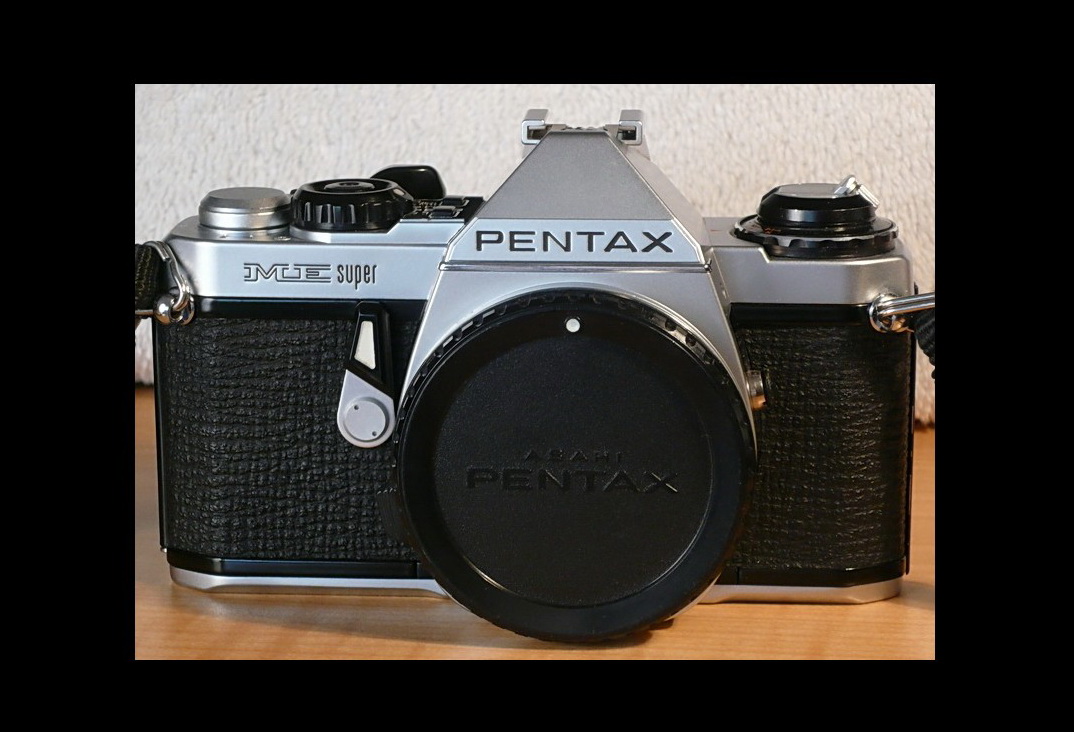
Eye-piece. I think you can use standard Nikon F type eye-pieces although I haven’t needed any. I show a Nikon FM, FE, FA -3.0 in the picture below.
Rangefinder and viewfinder. Double image coupled. Guide lines move as you move the focus closer or farther away. 75% magnification; 95% field of view at 1 meter, 92% at infinity.
Recommended service. Fuji wants you to send it in for shutter service after 5000 shots, and 10,000 shots for the film advance mechanism. I’m guessing most people that use these cameras will never need to service them under normal use. Digital cameras are for spraying and praying, medium format cameras require compositional thought, and careful set-up before pulling the trigger; at least from an economic standpoint.
My own approximate dimensions and weight; 7-7/8″ (199mm) long, 4-3/4″ (122mm) tall, 5″ (128mm) deep (hood closed, infinity focus). Weight is 3lb, 4oz (1467g).
Product samples
 Camera front showing front facing shutter button, and rangefinder windows.
 Your view when shooting on a tripod.
 Front of lens.
 Top showing level, hotshoe, film length selector, and winding lever
 Pressure plate, and camera interior.
 Box for lens, along with bag and manual, strap not shown.
 Left, standard Fuji supplied eye piece, on the right is a nikon version.
 Sony A6000 with kit 16-50mm lens on left, Fuji GSW690lll on right.
 Hood will extend over 77mm filter with 67-77 adapter.
 Very important filter with transparency film, graduated neutral density, 2-stop.
 35mm film overlaid on 120 6x9 film.
Sample Gallery, click yellow buttons below for full size versions.
Most of the images below were set-up shots or just snaps. I scanned them on a Nikon Super Coolscan 9000 ED. They are not necessarily the best they can be; sometimes it can be hard to get the piece of film perfectly flat for proper scanning; a virtual drum scanner would be nice, but I don’t have one to make any comparisons to. Depth of field is limited in some shots, and in others the film may have been a little wavy and not in perfect focus.
Most pictures are sized around 7000 pixels on the long end. You can eke out a little more resolution by keeping them around 8000, but they look nice and crisp slightly smaller.
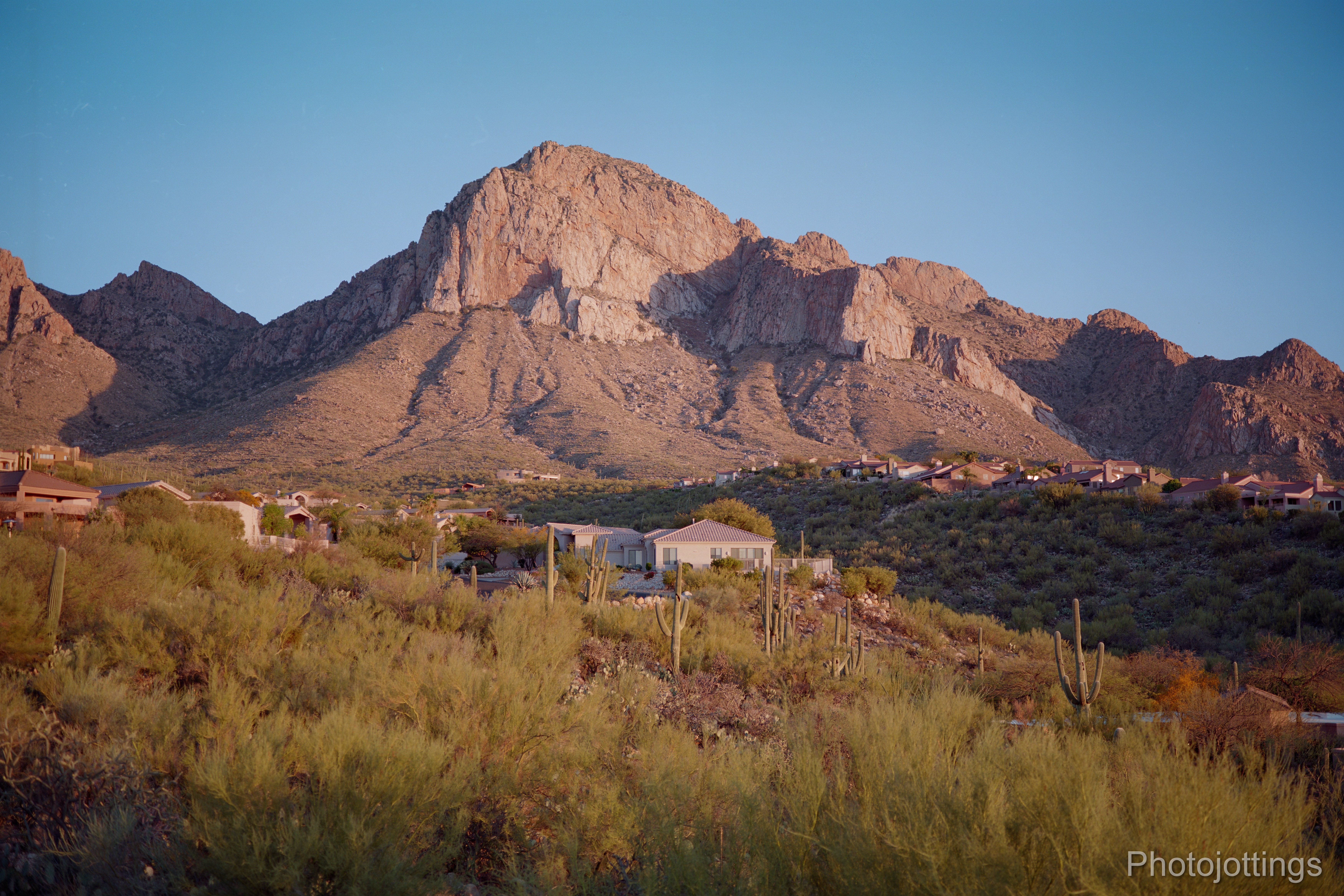
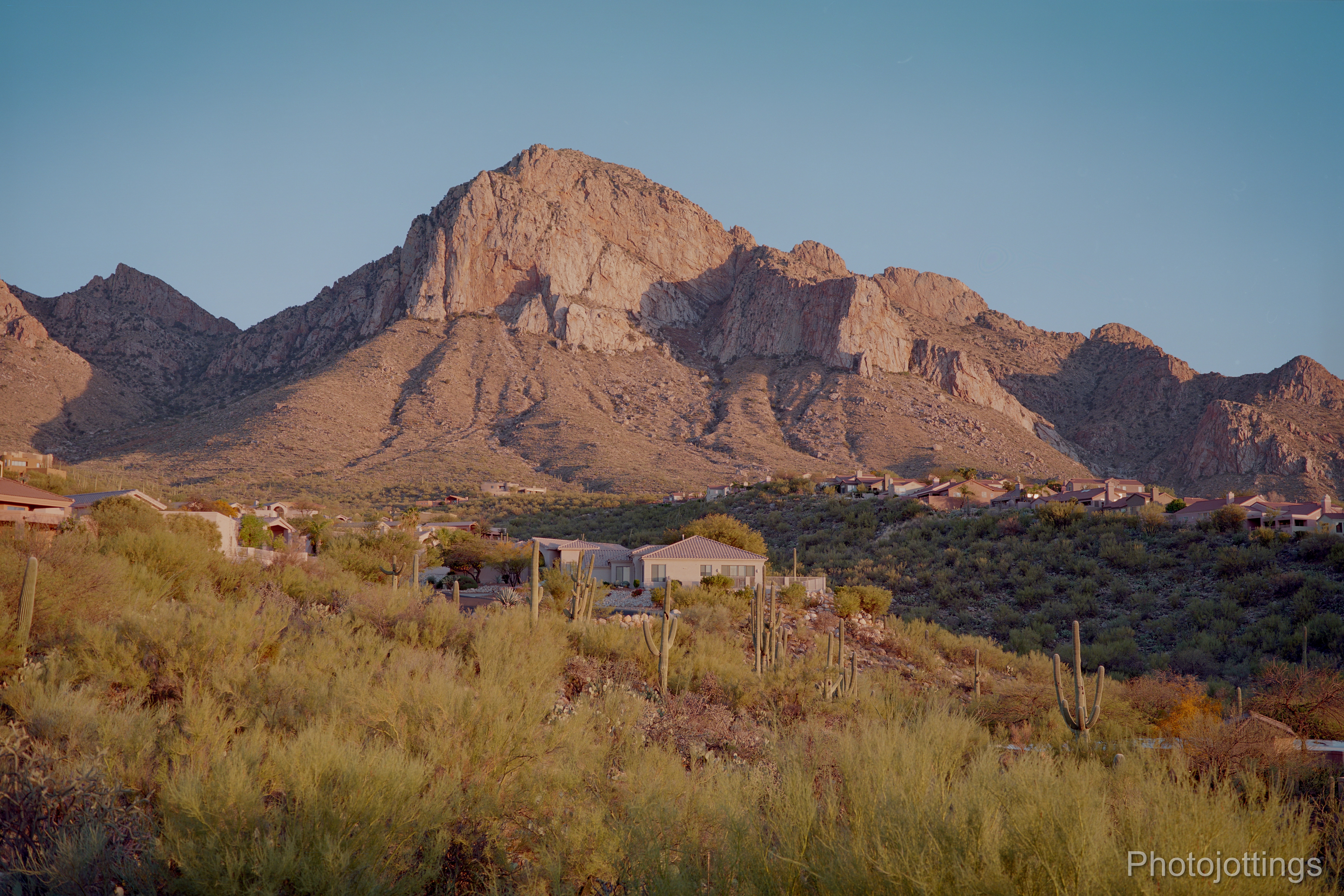
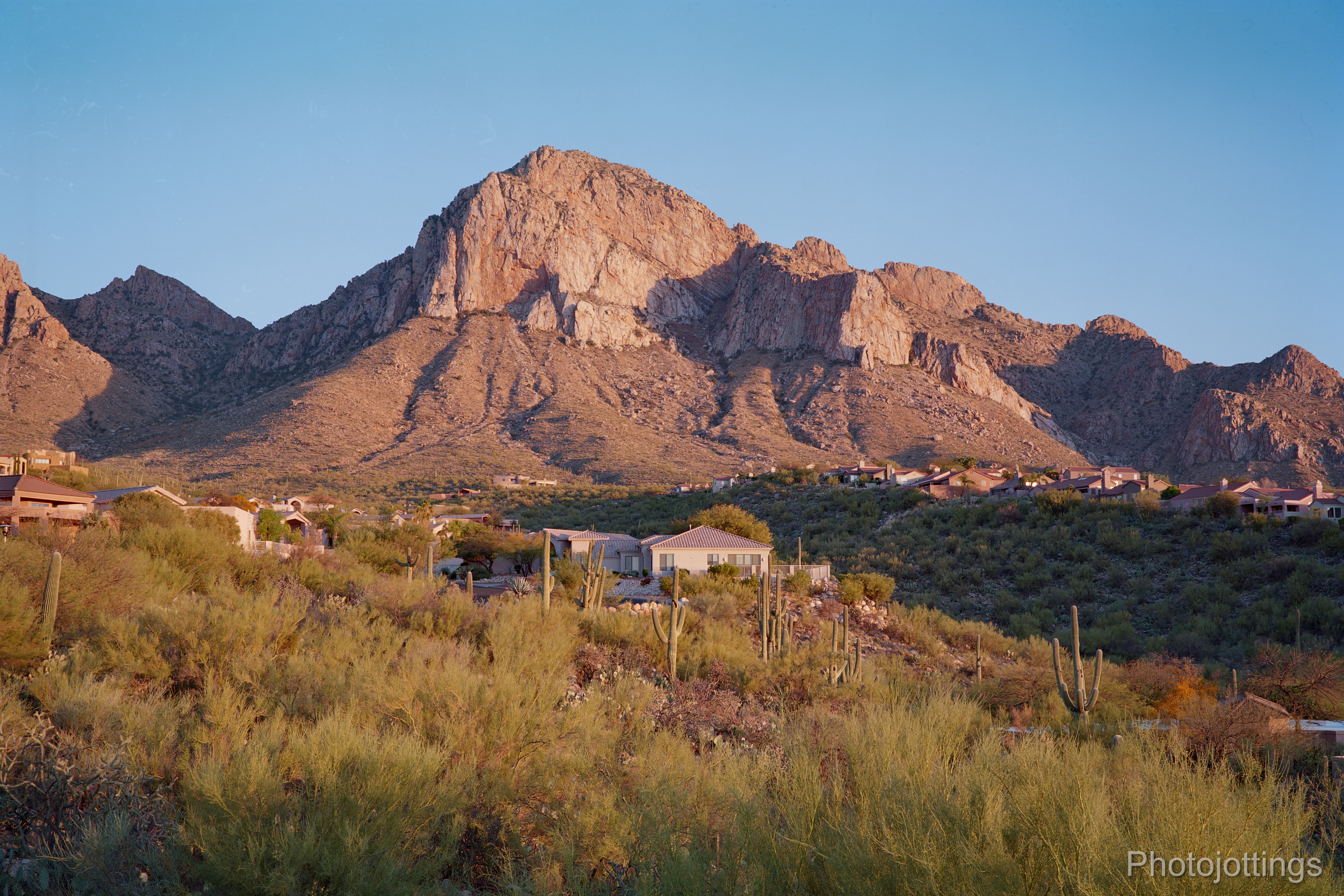
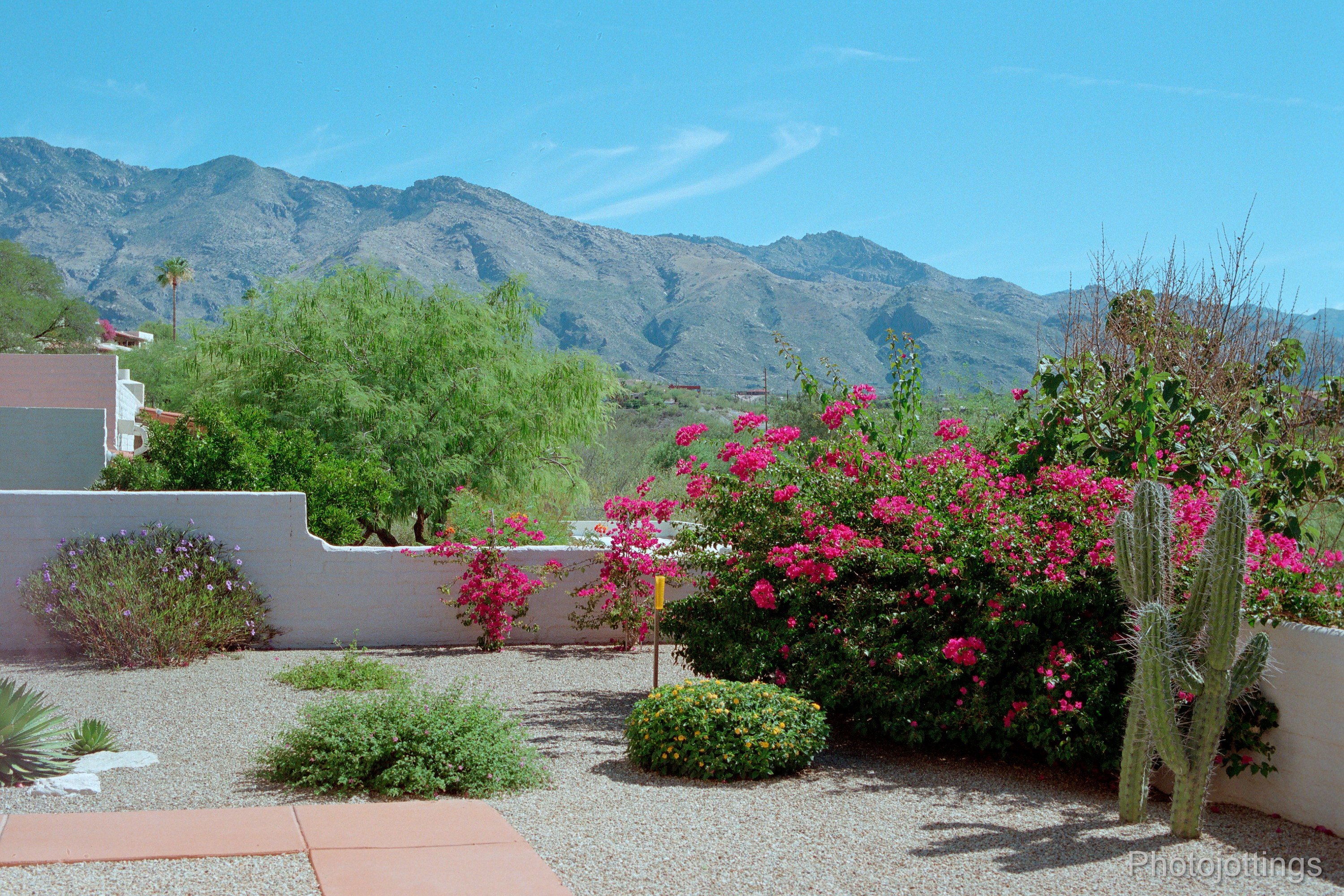
 Mountain scene, Fuji Velvia 100, F/16 at 1/60s
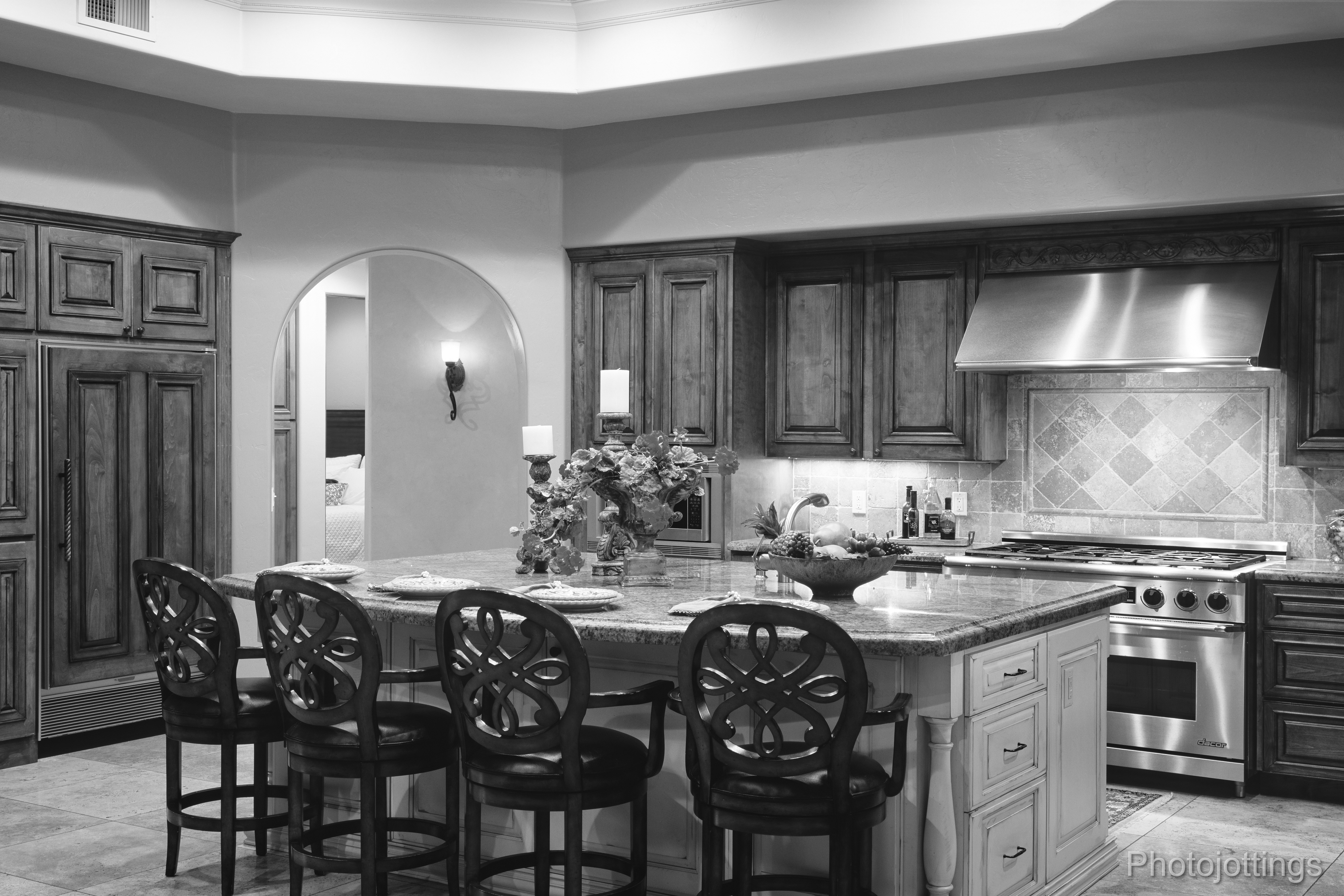
 Home interior, Fuji Velvia 100, F/22 at 15 seconds. Converted to B&W because of ugly lighting colors.
 Ford Escape, Fuji Velvia 100, F/4, 1/500s
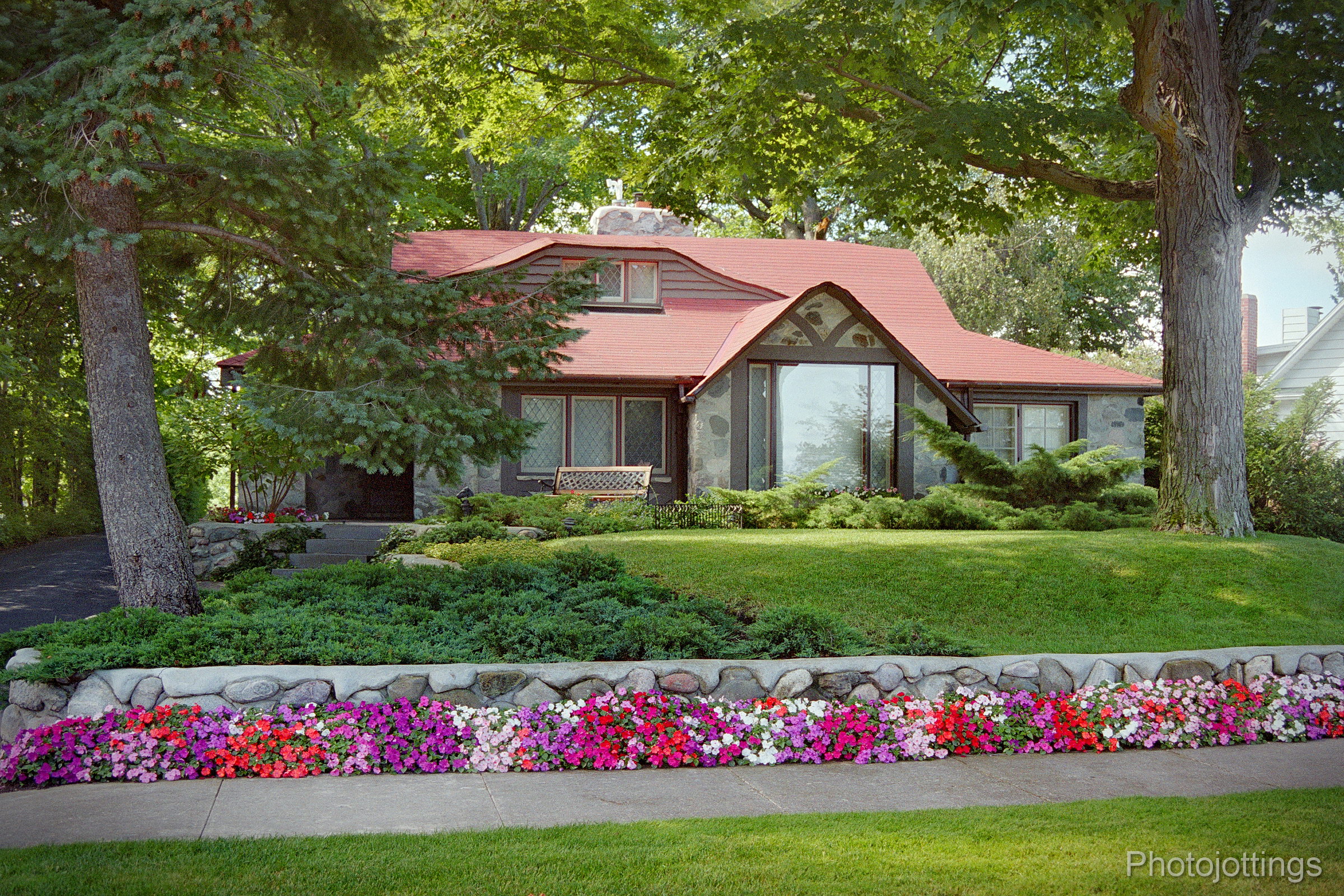
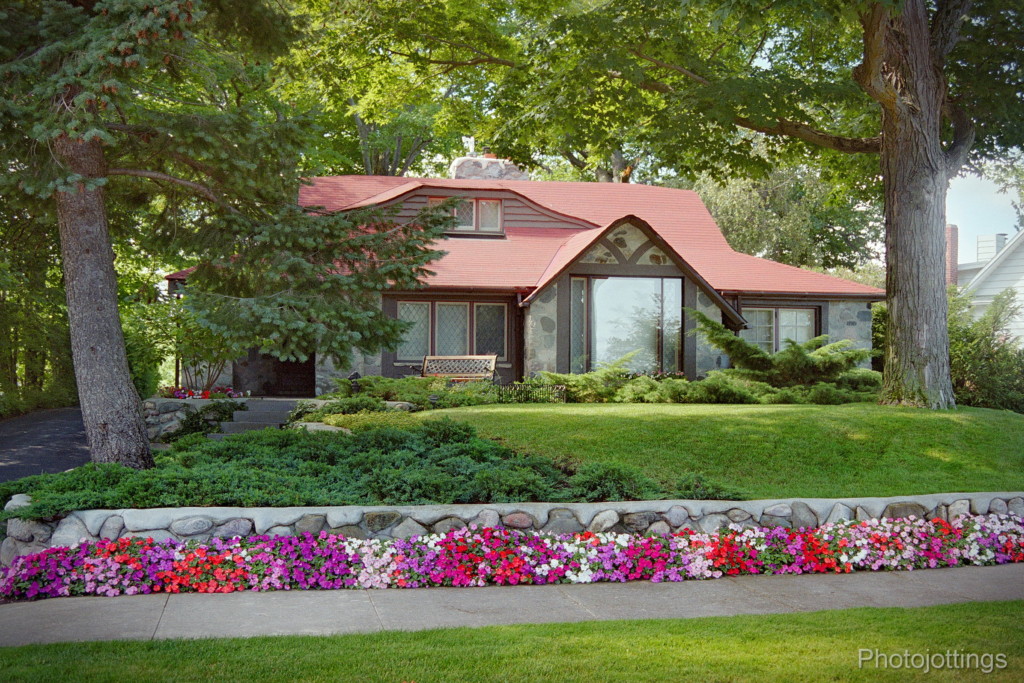
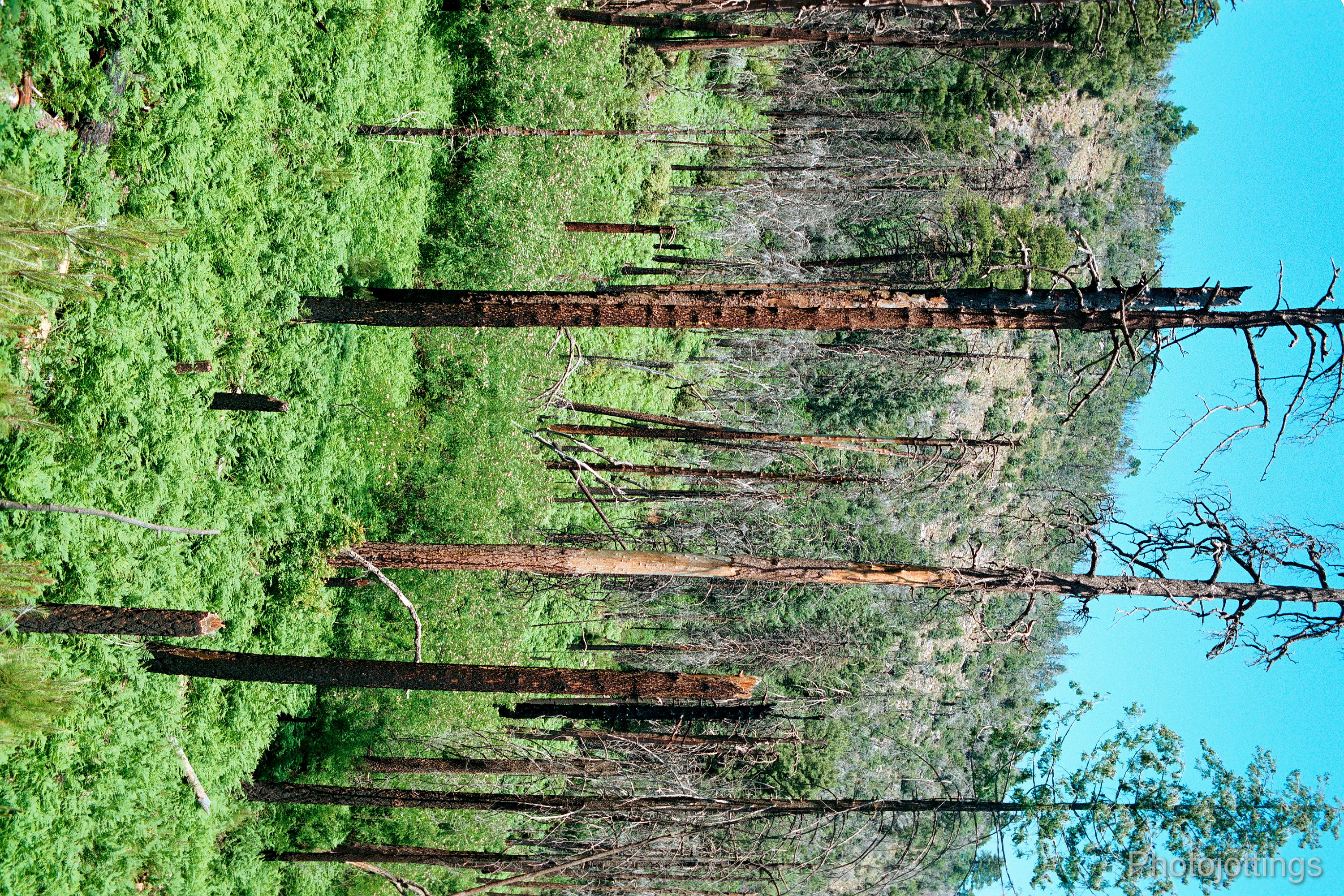
 Fall color, Fuji Velvia 100, F/11 at 1/60s
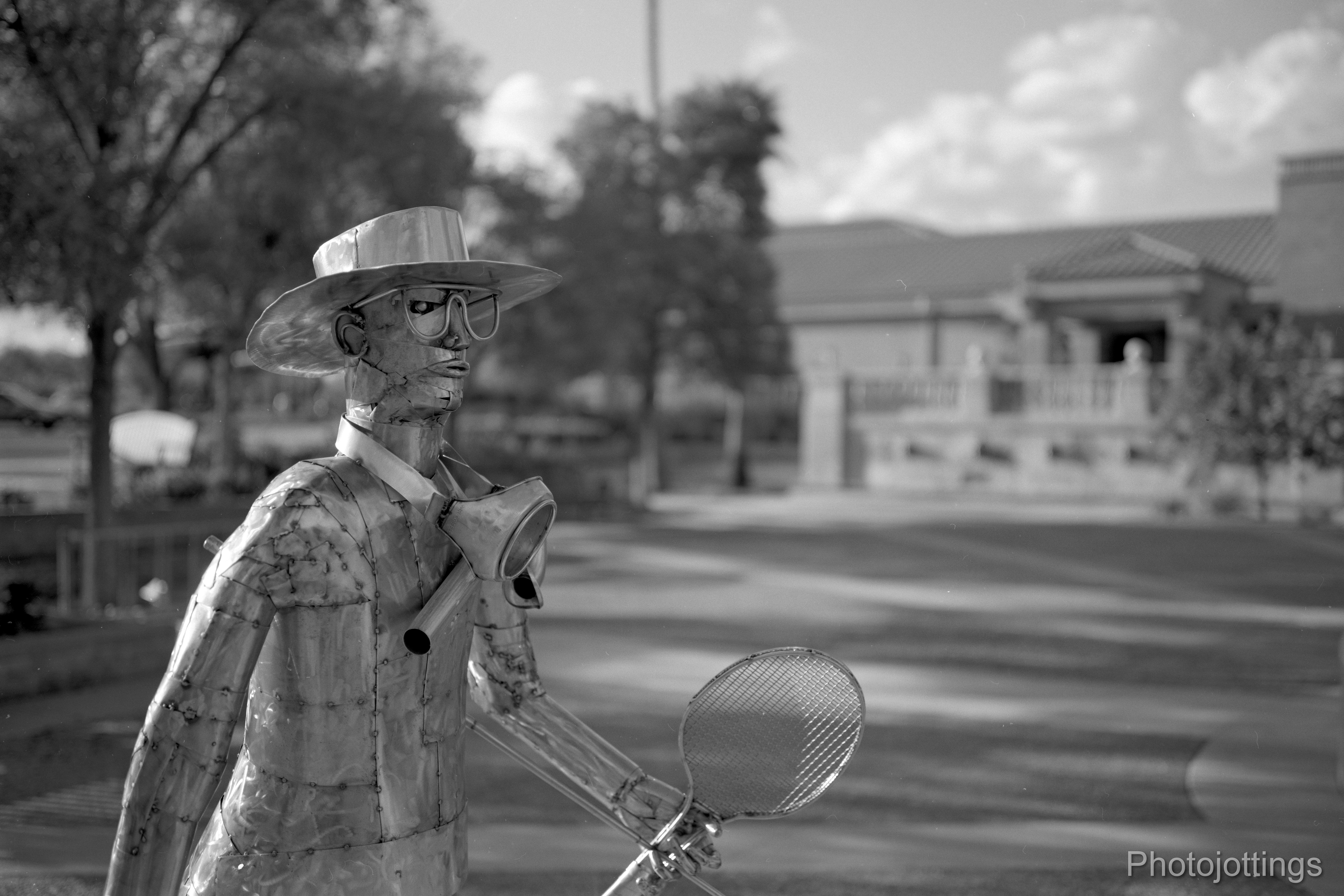
 Metal man, Fuji Neopan Across 100, F/3.5 at 1/125s
 Fall color iron door, Fuji Reala 100, F/11 at 1/60s
 Night scene, Ilford Delta 3200, F/3.5 at 1/30s handheld
 Very low distortion
 Flare at F/8
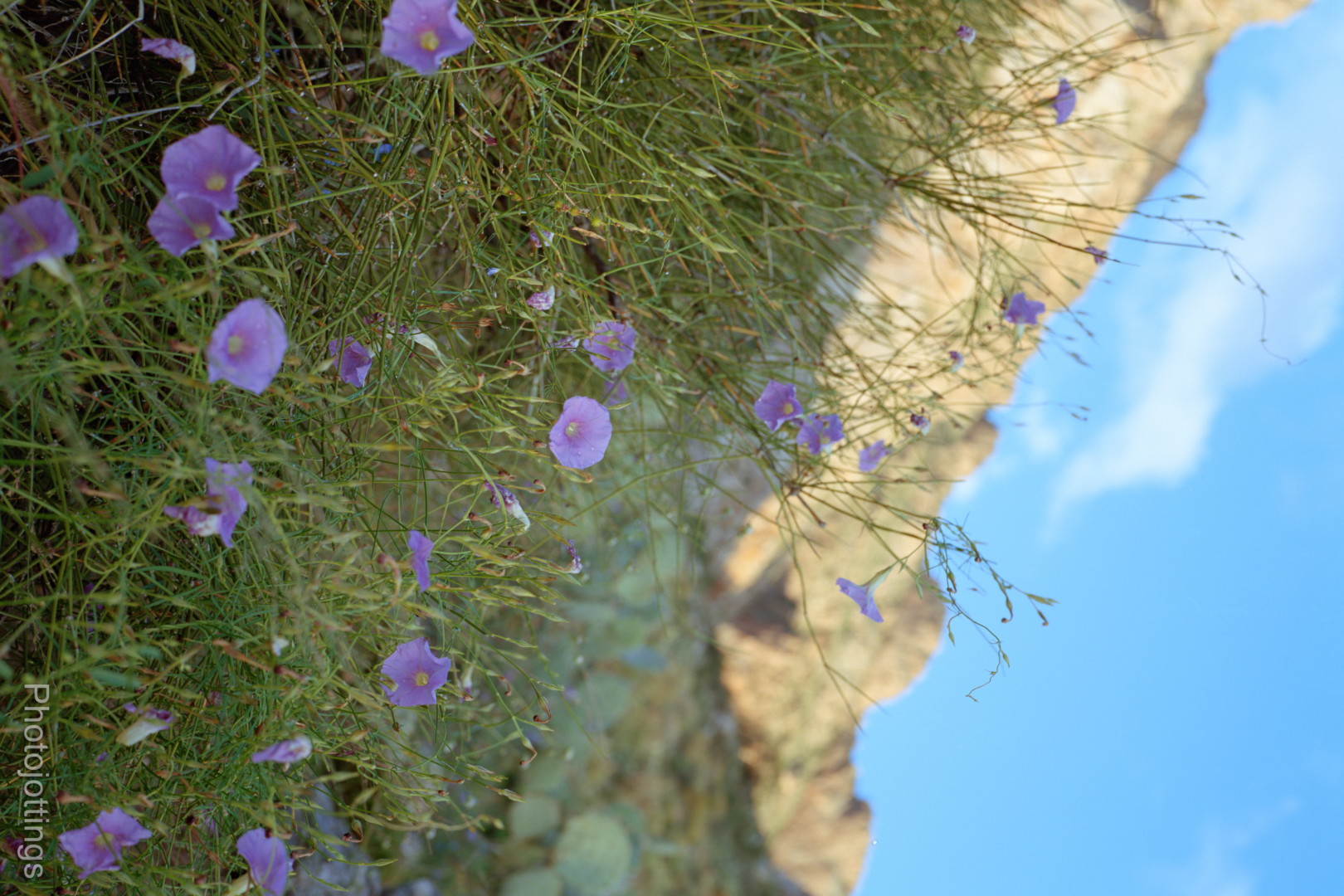
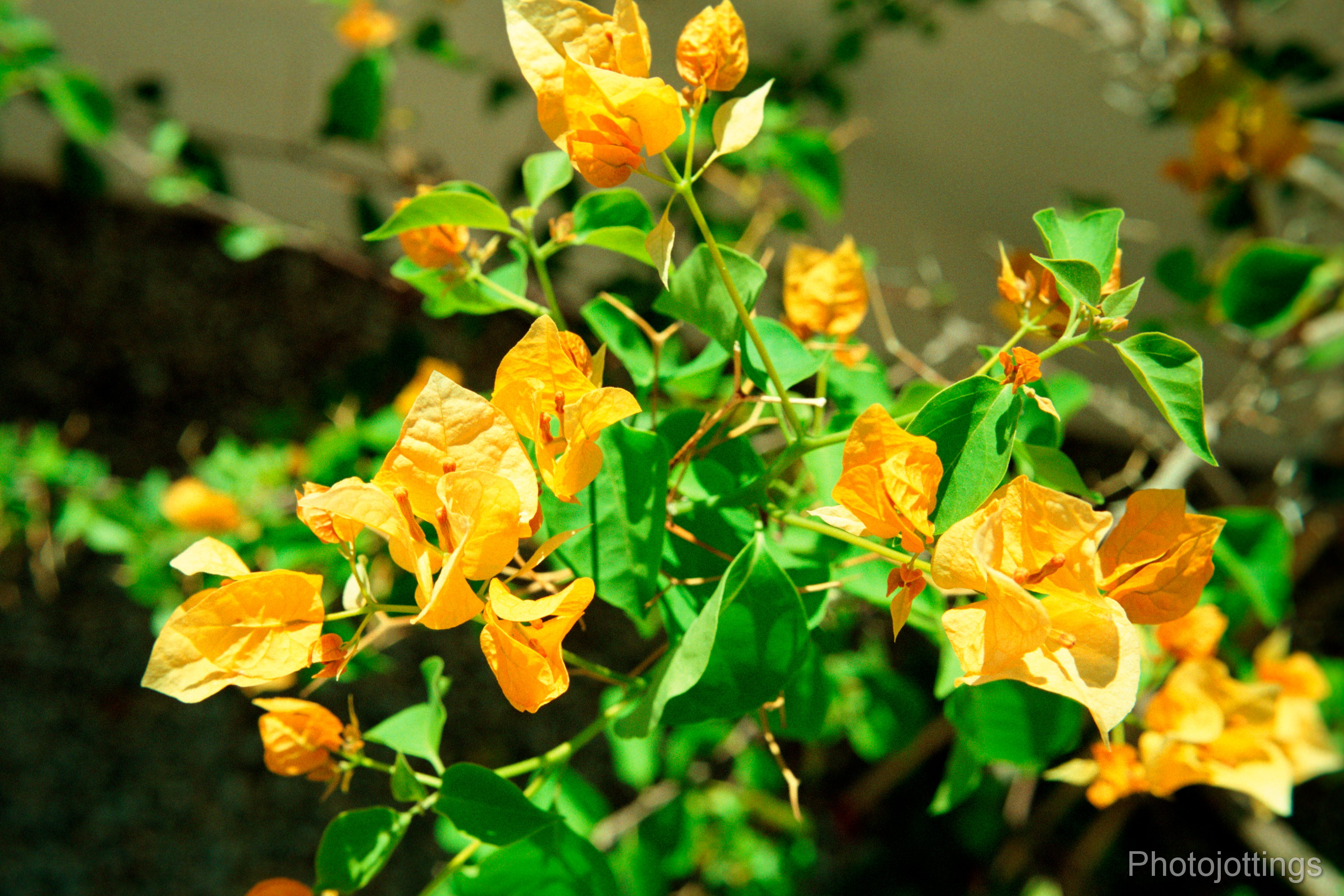
 Close focus flower, Kodak Portra 400, F/11 at 1/60s
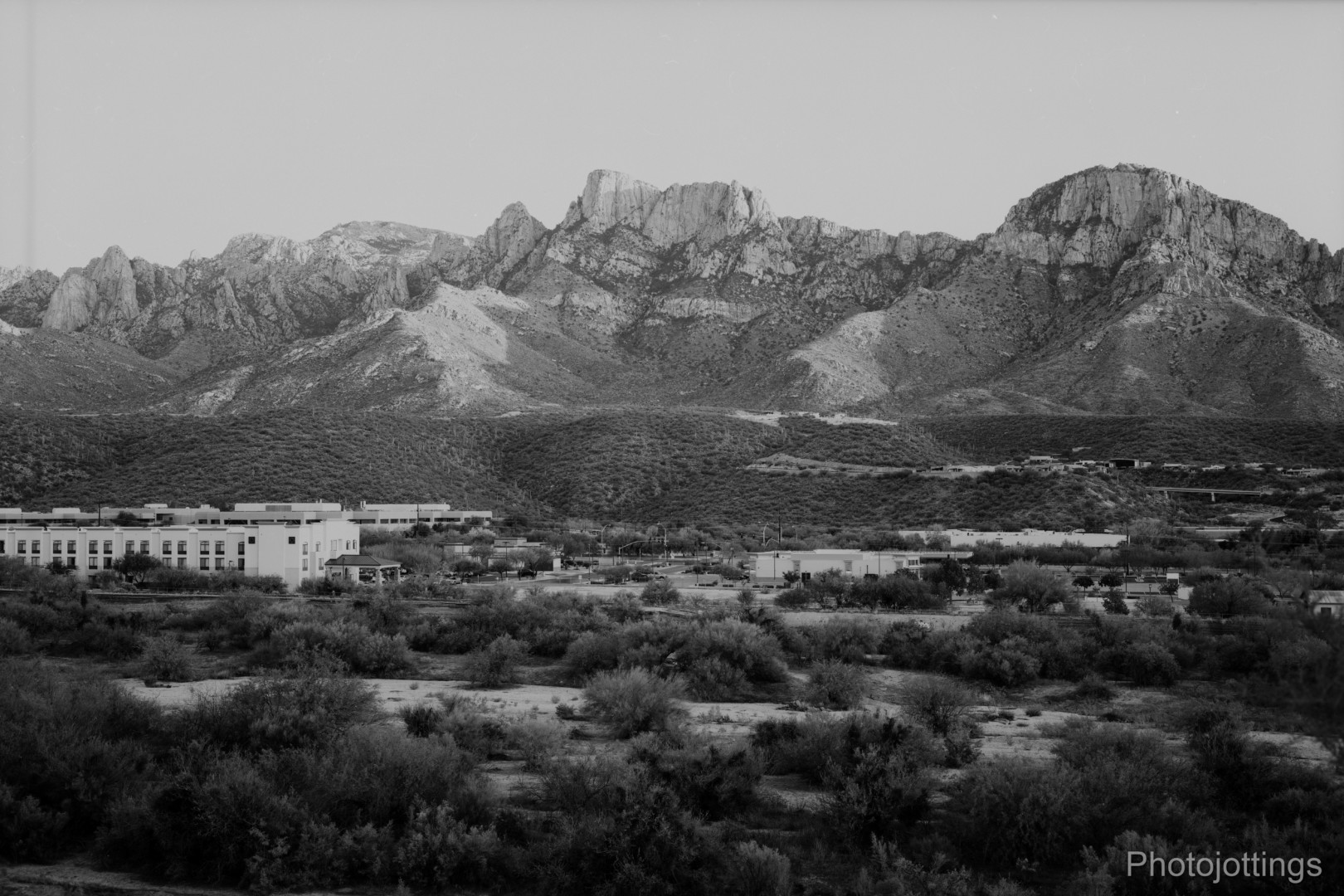
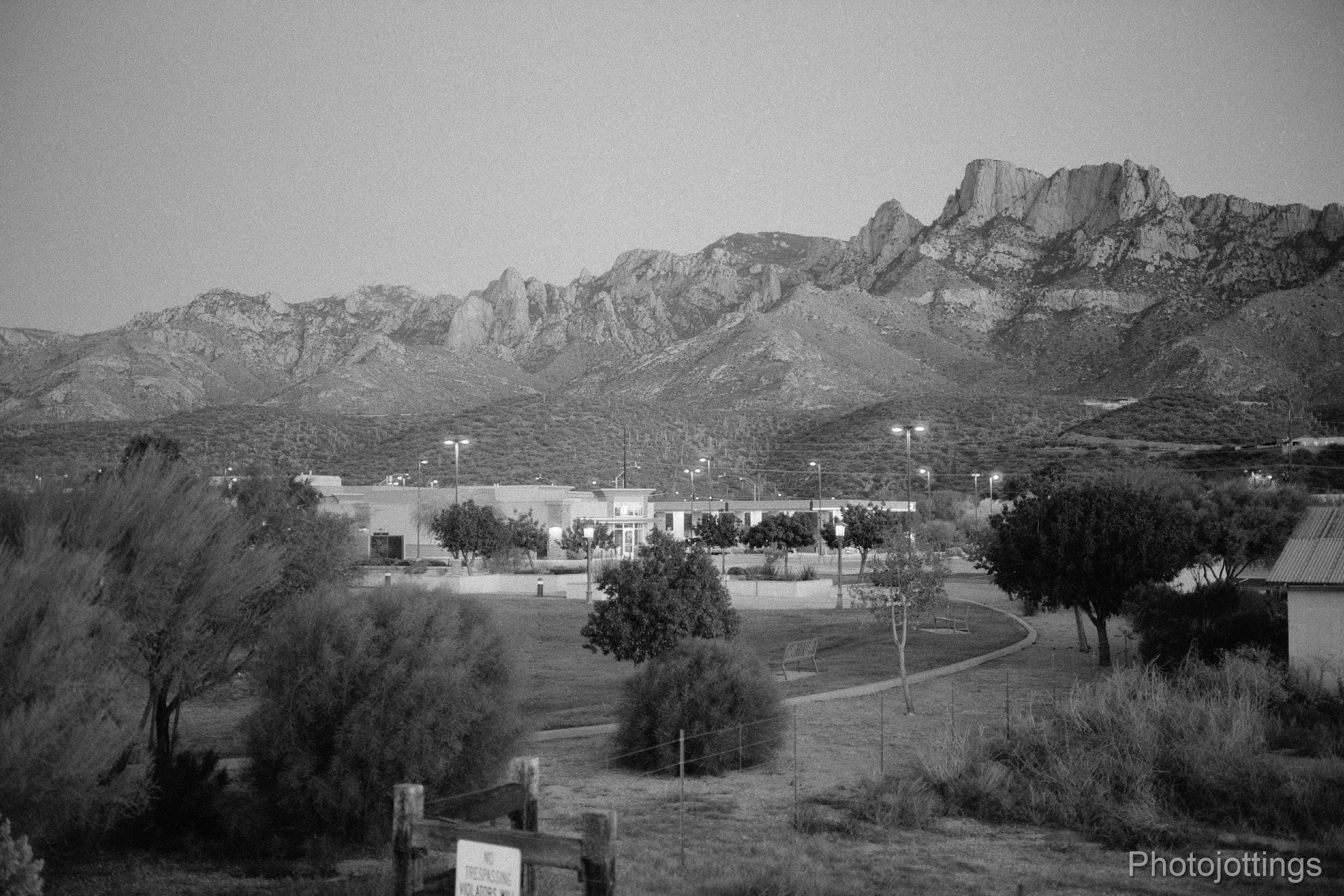

 Town scene, Adox CMS 20 II, F/8-11 shot at ASA 6.

 Artisan Center, Fuji Neopan Acros 100, F/16, 1/125s
Mountain scene Fuji Velvia 100 taken late in the afternoon at F/16, 1/60s. No graduated neutral density filter used for this shot.
Home Interior Fuji Velvia 100. Kitchen scene with too many different lighting types and colors, so I converted it to B&W. The 90mm lens is a little tight for this kind of work. F/22 at 15 seconds.
Ford Escape Fuji Velvia 100 at F/4, 1/500s. See me in the door!
Fall color Fuji Velvia 100 at F/11, 1/60s.
Metal Man Fuji Neopan Acros at F/3.5, 1/125s. Distance is around 10′ or 3 meters.
Fall color Iron Door Fuji Reala 100. Good fine grain color film, but Kodak Portra 400 is just as good with an extra two stops to work with! F/11 at 1/60s.
Night Scene Here I used Ilford Delta 3200 handheld at dark! F/3.5 at 1/30s. This film is actually ISO 1000; check out the small print on the box. When you hand it to your developer, they should ask you what ISO you shot the roll at, it will make a difference when they develop it, that’s why they sell it as ISO 3200. This film is pretty sharp, but very grainy, even downsized to 4000 pixels wide. I get better results with Kodak Portra 800 shot at 1600.
Distortion The distortion curve is almost straight by looking at the roof line of this beautiful mountain home.
Sun flare The lens has a little ghosting and flare when the sun is in the picture; it’s about what you’d expect with an average newer digital lens. F/8 aperture used.
Close focus flower This Kodak Portra 400 flower picture is focused at about 1 meter. Not a lot of depth of field here at F/11. Rotated for slide show aspect ratio.
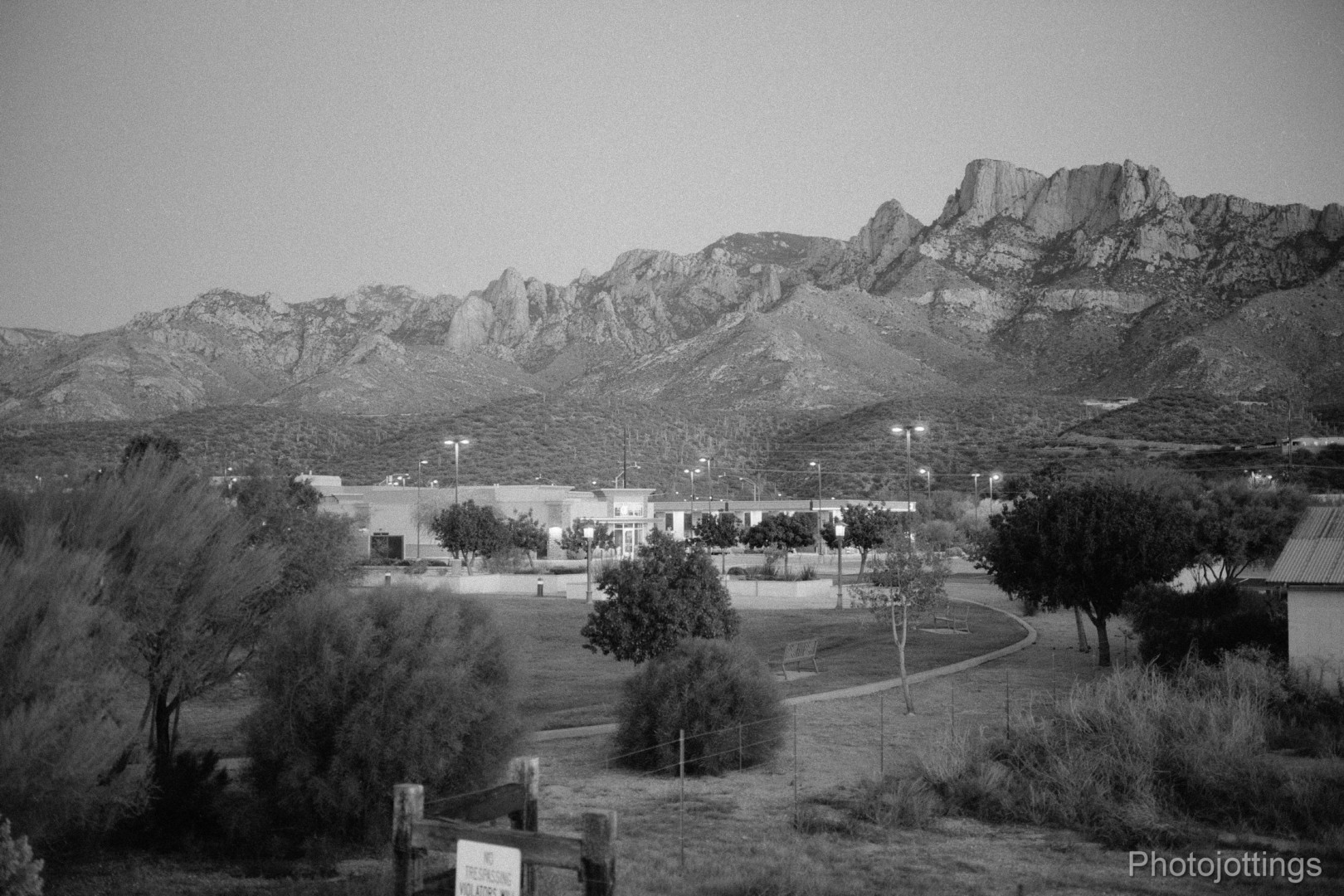
Town scene This is Adox CMS II high contrast copy type film which features extremely fine grain and high resolution; it’s also very slow at ISO 12-20 depending on developing chemistry; however, I got the best results at ISO 6, so good luck hand holding while taking pictures! This sample image is 9000 pixels wide, but shows a little more detail at 10,000 pixels wide or more. For the sake of downloading I kept it at a manageable 13mb. This film is very contrasty as you can see, especially when developed in normal B&W chemistry as I did here. Adox sells a special developer (Adox Adotech III) for pictorial use which helps widen the dynamic range, although it was out of stock when I shot this roll. Check out the details in this near sunset valley view; you can see the chain links in the fence dead center against the dark little truck! Resolution here would easily beat any consumer digital camera south of 100mp. Note; this film is curly,(adox should try to produce non curling film as Kodak did over 100 years ago) and hard to scan properly with my current equipment.
Artisan Center Another Fuji Neopan Acros picture. I really like this film, it’s almost as fine grained as Ilford Pan F Plus, but a stop faster. F/16 at 1/125s.
Click yellow buttons for full size image.
Use notes: the Fuji 90mm lens is very sharp wide open, even along the sides, but maybe just a tad sharper at F/8, so there isn’t much of a reason to stop down the aperture unless there are depth of field requirements. Remember, you are getting the depth of field of a 90mm lens, (not a 40mm).
Film use. I normally use inexpensive Kodak Ektar, it has a nice light range, about the same as a good Digital camera with a Sony made Sensor. It scans well, and with a little color tweaking, can be made to look similar to digital if you like that look. Fuji Velvia is quite good, I use the ISO 100, it’s just as sharp as the ISO 50 but you get an extra stop of light. Fuji Provia 100F has a more subdued color palette for people pictures. Kodak Portra 400 is very good too and great for hand held shooting, It also scans well. For those out shooting the old folding cameras that need to be stopped down hard for sharp pictures, use Kodak Portra 800, it’s a little expensive, but an excellent fast fine grained film.
For transparency (slide) film, use a light meter, and a graduated neutral density filter if you have big thunderheads you want to keep from blowing out. Transparency film is not good for beginners, it has a narrow light range, and will clip shadows and highlights quickly! However, if exposed correctly, it looks great on the light table! For print film, go 1-2 stops longer than your light meter reads and your shadows will look much better. Usually, print film clips dark shadows and they look awful, but adding one or two stops to the exposure keeps them from being too dark. The highlights will be ok, print film is very forgiving of moderate over exposures. I’ve recently been shooting more B&W film. I have used Kodak T-max 100, (Pan F Plus, my old favorite), (Acros my new favorite) and (FP4, classic BW, it’s ok) but as with all B&W film, it’s sometimes hard to get a good scan as you don’t have digital image correction and enhancement, (D-ICE that eliminates dust and scratches automatically), and some film grain shows harsh with most dedicated film scanners like the Nikon 9000. Flatbed scanners like the Epson V700 do a good job with B&W because it has a long fluorescent tube that flattens out the grain, whereas the Nikons have tiny LED lights that accentuate it. The Hassleblad X5 scanner has a special light that reduced grain, but it also reduces the resolution.
Here in Tucson AZ, costs average about $7 for a roll of 120 film, and about $7 to develop print film, that’s almost $2 a shot. Getting basic scans (around 3000 pixels wide) burned to a CD from you local camera shop will probably cost approximately $10 extra. It does get even more expensive if you have high resolution scans made for each shot, so save that for only your best shots! Better yet, get a high quality film scanner and do it yourself.
The Fuji GSW690 and 6×9 area of film are capable of producing very sharp digital scans (using a high quality film scanner) of around 7000 to 9000 pixels long for traditional films, which equates to over 35+ super sharp megapixels. Specialty films like Adox CMS 20 II will most likely exceed your scanners ability to pick out the finest details, but the Nikon 9000 will produce 10,000 pixel wide images that are tack sharp, which would be about 67 megapixels. (note; Adox CMS 20 II is a high contrast copy film, and needs a special developer for good pictorial use.)
Test scene at different apertures. Tripod used, no filters. Kodak Ektar 100. All are 7000×4667 wide, and were scanned on a Nikon Super Coolscan 9000 ED.
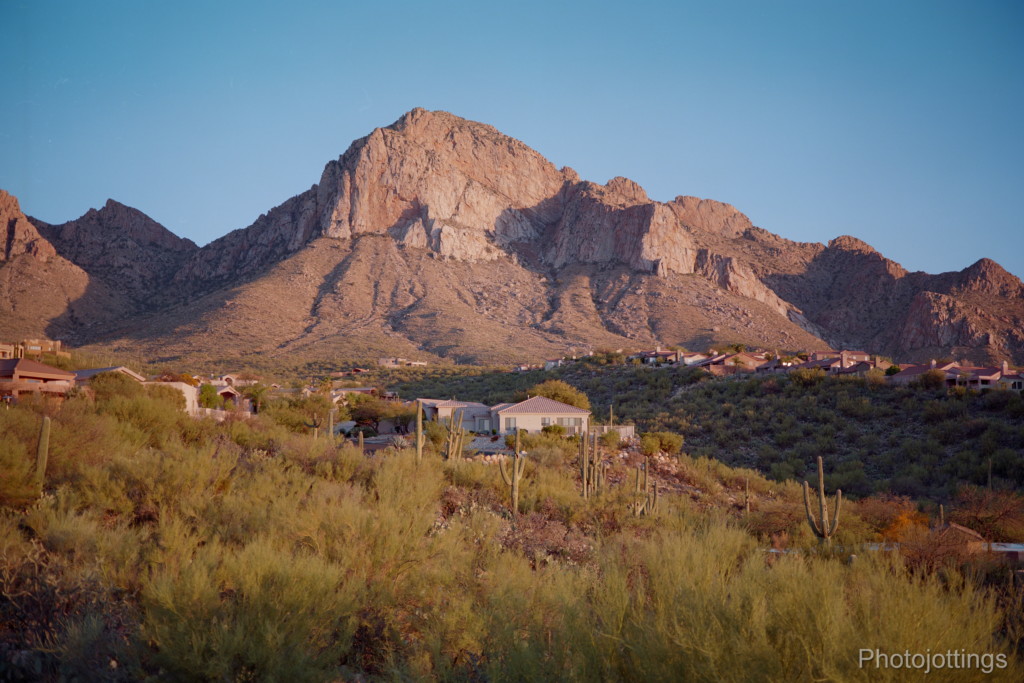
F/3.5. quite sharp all over wide open.

F/5.6. About the same as F/3.5, but with a noticeable jump in contrast in the center area.
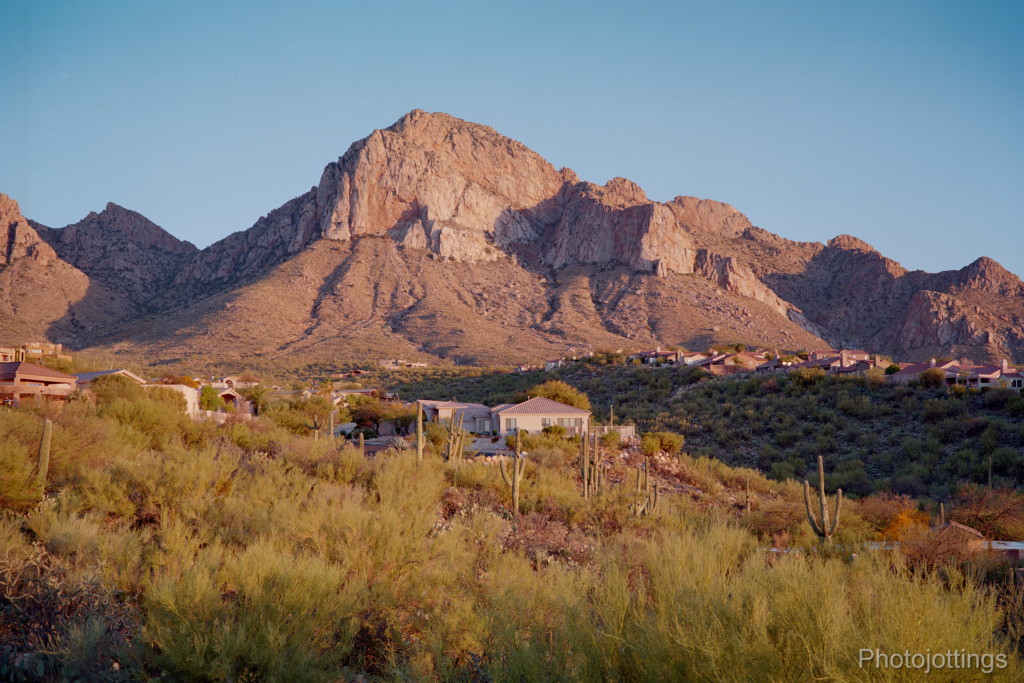
F/8. Very sharp at this aperture, a noticeable jump in resolution, especially along the sides, left side more so than the right.

F/11. The lens is maxed out in sharpness and contrast.

F/16 is about the same as F/11.
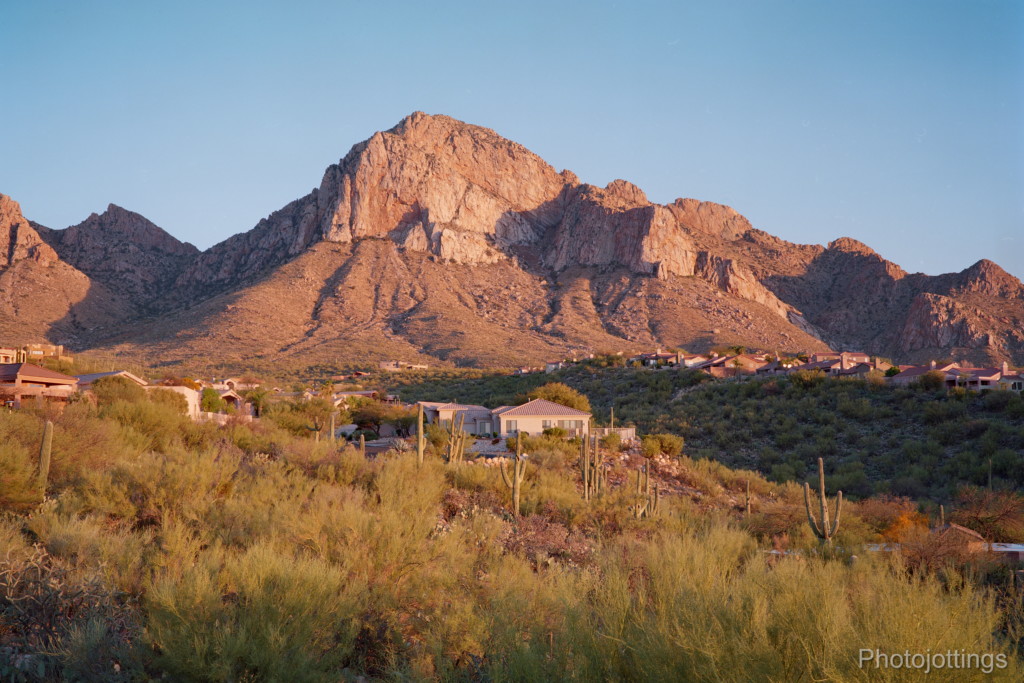
F/22. Diffraction softening shows up here, although not bad at all; F/32, not shown, is slightly softer.
Conclusion.
The Fuji GW690III is a wonderful piece of equipment for film shooters that want normal to slightly ‘wide’ coverage, and care about resolution and large printing. Unfortunately, this camera is not for everyone because there are some negatives involved. First, it’s larger and heavy, believe me, you won’t want to carry this around all day; your shutter speeds are long even in good light, cost per shot is quite high; remember, you only get 8 shots per roll. High quality scans are expensive. And sadly, some labs are no longer developing E6 (transparency) film.
In my opinion, this camera is best on a tripod using fine grain film like Ilford Pan F Plus, Fuji Velvia and Provia 100F, and maybe some really fine grain (ISO 6-25) copy film like Adox CMS II. Typical exposure times in good light are 1/60sec at F/16, ISO 100 film. Late afternoon or early morning shots can be 1 second or more! Shooting interiors can easily be over 10 seconds at F/22. Hand held use requires ISO 400 or higher to help prevent blurry shots from jitter. I get about 3-4 slightly blurry shots from a roll hand held at 1/30sec, but going to 1/60 gives me about 7 tack sharp images per roll. Occasionally I get lucky and get a good shot at 1/15sec. Note; I use a Gossen Digisix 2 light meter; it works great. For Transparency film, I most often use the setting it gives me, and of course adjust that reading depending on whether the highlights or shadows are more important. For print negatives, I usually go with at least one stop longer than box speed, but it depends on the scene, if I want good definition in thunderheads, I might go with the meter reading or a stop faster, if I have no really bright highlights, but want good shadow detail, I may give the exposure three or more extra stops. The meter is easy to use, you set your ISO, and take a reading, (it gives you light values like ’14’ for daylight etc), then input that number on the dial to get your aperture and shutter combination for the correct exposure. In all honesty, I don’t use a meter much for print film, I just guess at the exposure using the sunny 16 rule, and adjust as I feel necessary.
These cameras currently go for around $500 in good used condition on eBay. Don’t buy one that’s really beat up and has a super low shutter count, it has probably seen heavy use, and the counter has flipped over to 0. I’d gladly pay extra for a clean low count model, say less than 500 on the counter.
I love film for several reasons; it allows me to enter into a contemplative style of shooting instead of just blasting away with a digital camera and hoping something comes out good. I can hold a piece of film in my hand; the film was in the camera at that time and location, so when you look at all your family pictures from yesteryear (especially slides), you know they were at the scene, touched and loaded into the camera by a loved one and kept safe all those years. Digital images are washed away as soon as the sensor is cleared, all you get is a code on a memory card that tells the device how to display it. Prints are only copies, not originals. Try looking at a 6×9 transparency from this Fuji camera series on a light table with a 10-22x loupe, it’s stunning, almost like you are there, and the colors are far greater than what you can get on any computer monitor, tablet or smart phone.
The medium format Fuji GW690 series are classics that can be used for a lifetime, with enough resolution for future proofing on 8k screens. My Dad used just one camera (an Aires 35 III L 35mm) nearly his entire life. I used two cameras in twenty years until digital came along. Will your current digital camera be with you on photo outings in 10 or 20 years, or even 2 years?